
The rapid expansion of global aquaculture has created higher expectations for fish feed production. Modern fish farming requires feed that not only provides balanced nutrition but also improves growth performance, reduces waste, and supports sustainable production. As feed costs represent a significant portion of aquaculture operating expenses, improving feed manufacturing efficiency has become a major priority for commercial fish feed producers.
Fish feed extrusion technology has become one of the most effective solutions for producing high-quality aquatic feed. Compared with traditional pelletizing methods, extrusion provides better control over feed structure, digestibility, water stability, and pellet density. However, achieving high extrusion efficiency depends on many factors, including raw material preparation, process optimization, equipment performance, automation level, and production management.
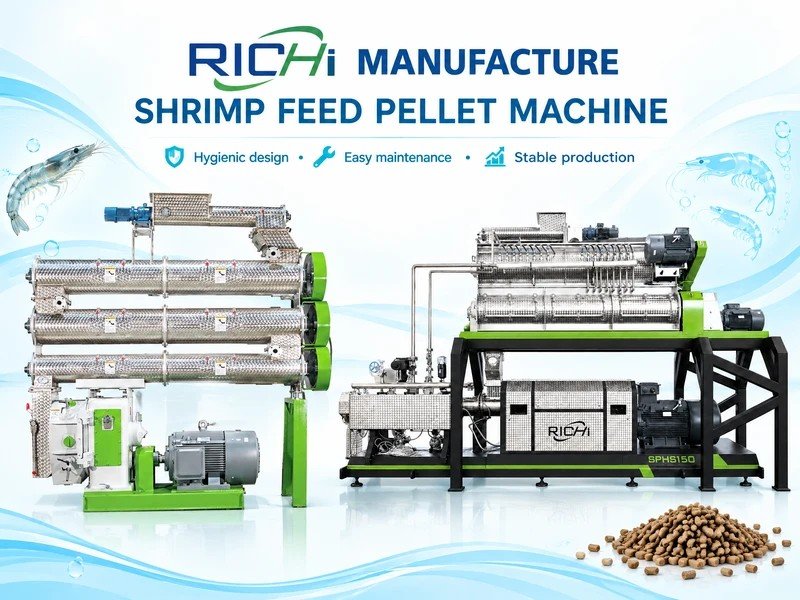
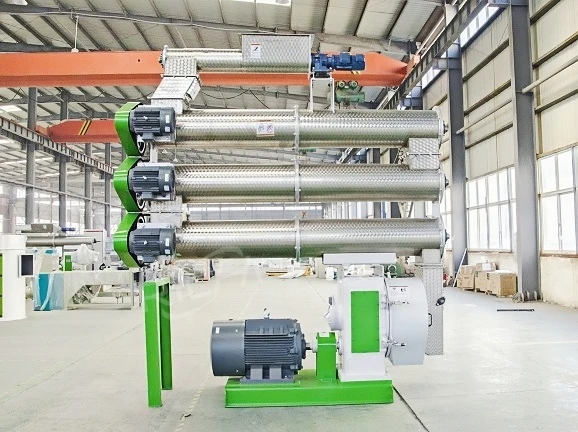
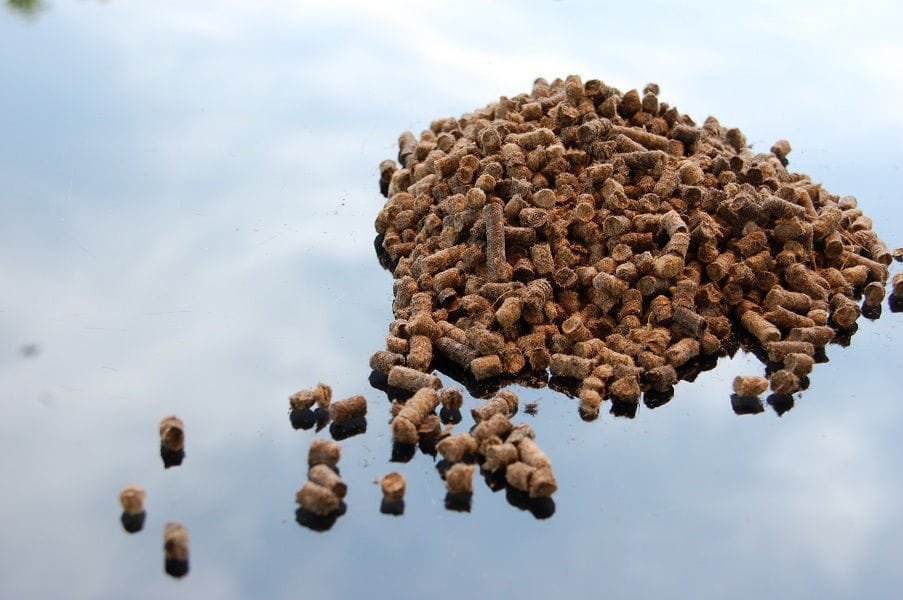
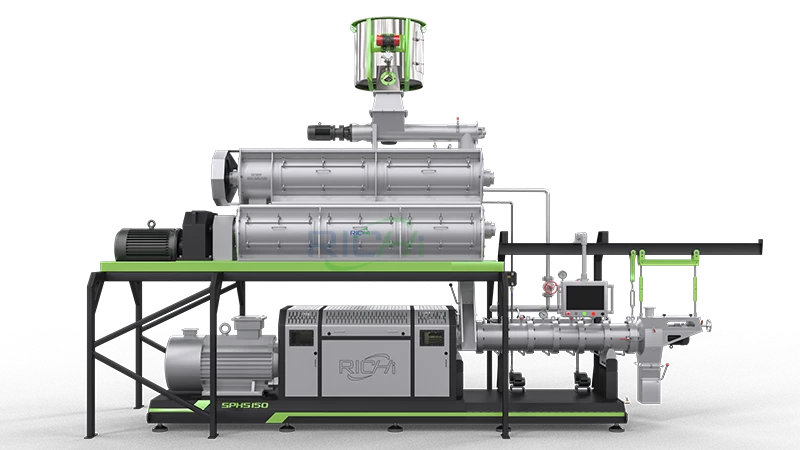
A modern floating feed extruder machine plays an important role in improving the efficiency of fish feed extrusion. By precisely controlling temperature, moisture, pressure, and mechanical energy, it can produce floating pellets with excellent expansion, stable buoyancy, and consistent quality. Efficient extrusion not only improves feed performance but also helps manufacturers reduce production costs and increase competitiveness in the aquafeed market.
Understanding Fish Feed Extrusion Efficiency
Fish feed extrusion efficiency refers to the ability of an extrusion system to produce high-quality feed products with maximum productivity and minimum resource consumption.
An efficient extrusion process should achieve:
- Stable production output
- Low energy consumption
- Consistent pellet quality
- High nutrient retention
- Reduced material waste
- Easy operation and maintenance
Extrusion efficiency is not determined by a single factor. Instead, it is the result of interactions among raw materials, formulas, processing conditions, and equipment design.
When these factors are properly optimized, manufacturers can achieve better production performance while maintaining high feed quality.
1. Optimized Raw Material Selection Improves Extrusion Efficiency
The quality and characteristics of raw materials have a direct influence on extrusion performance. Different ingredients behave differently under heat, moisture, and pressure, so selecting suitable materials is the first step toward efficient production.
Common raw materials used in fish feed production include:
- Fish meal
- Soybean meal
- Wheat flour
- Corn
- Rice bran
- Vegetable protein sources
- Fish oil
- Vitamins and minerals
Proper Ingredient Balance
A balanced formula improves both nutritional value and processing performance.
For example:
- Starch improves expansion and pellet binding.
- Protein provides essential nutrients for fish growth.
- Fiber affects material flow and pellet structure.
- Fat improves energy value but may reduce expansion if excessive.
An optimized formula allows the extruder to operate more smoothly and reduces processing problems.
Consistent Raw Material Quality
Variations in raw material moisture, particle size, or composition can affect extrusion stability.
High-quality ingredients with consistent properties help maintain:
- Stable pressure
- Uniform pellet formation
- Lower production fluctuations
Therefore, proper raw material management is essential for efficient fish feed extrusion.
2. Efficient Grinding Improves Processing Performance
Grinding is an important preparation stage before extrusion. The particle size of raw materials directly affects mixing quality, moisture absorption, and pellet formation.
Fine and uniform grinding provides several advantages:
- Better ingredient distribution
- Improved starch gelatinization
- Smoother pellet surfaces
- Higher extrusion stability
If particles are too large, they may cause uneven processing and weak pellet structures. If particles are excessively fine, energy consumption may increase.
Finding the optimal particle size improves both production efficiency and final feed quality.
3. Advanced Conditioning Improves Extrusion Results
Conditioning is one of the most important steps before extrusion. It prepares the feed mixture by adding moisture and heat before it enters the extrusion chamber.
During conditioning:
- Steam softens ingredients
- Moisture becomes evenly distributed
- Feed materials become easier to process
Effective conditioning improves:
- Material flow
- Starch gelatinization
- Pellet expansion
- Extrusion stability
A well-designed conditioning system reduces the workload of the extruder and improves overall production efficiency.
For commercial aquafeed plants, advanced conditioners with accurate moisture and temperature control can significantly enhance extrusion performance.
4. Precise Moisture Control Increases Efficiency
Moisture is a critical parameter in fish feed extrusion. Proper moisture levels influence material behavior, energy consumption, and pellet quality.
Effects of Insufficient Moisture
Low moisture content may cause:
- Excessive friction
- Increased energy consumption
- Poor expansion
- Unstable pellet structure
Effects of Excess Moisture
Too much moisture may result in:
- Lower floating ability
- Increased drying costs
- Reduced production efficiency
Efficient extrusion requires maintaining an appropriate moisture range according to feed formulas and equipment conditions.
Advanced extrusion systems can automatically regulate moisture addition, improving production consistency.
5. Optimized Temperature Management Improves Performance
Temperature control is essential for efficient extrusion because it affects starch gelatinization, protein modification, and pellet formation.
During extrusion, proper temperature conditions help:
- Improve digestibility
- Strengthen pellet structure
- Reduce anti-nutritional factors
However, temperature must be carefully controlled.
Low Temperature Issues
Insufficient temperature may lead to:
- Incomplete starch gelatinization
- Poor pellet durability
- Lower nutrient utilization
Excessive Temperature Issues
Too much heat may cause:
- Nutrient degradation
- Higher energy consumption
- Reduced feed quality
Modern extrusion equipment uses advanced heating and monitoring systems to maintain stable processing conditions.
6. Improved Screw Design Enhances Extrusion Efficiency
The screw system is the core component of an extruder. It controls material transportation, compression, mixing, and shear.
An optimized screw design improves:
- Material flow
- Processing stability
- Energy efficiency
- Production capacity
Different feed formulas require different screw configurations. For example, high-protein aquatic feed may require different processing conditions compared with starch-rich formulas.
A properly designed screw system allows manufacturers to achieve better extrusion results with lower energy consumption.
7. Advanced Floating Feed Extruder Machine Improves Productivity
The development of advanced extrusion equipment has greatly improved fish feed manufacturing efficiency.
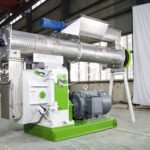
A modern floating feed extruder machine is designed to produce high-quality floating pellets with stable performance.
https://richipelletizer.com/floating-fish-feed-extruder-machine
Its advantages include:
Higher Production Stability
Advanced control systems maintain consistent operating conditions, reducing fluctuations during production.
Better Expansion Control
Precise adjustment of temperature, moisture, pressure, and screw speed improves pellet expansion and floating ability.
Lower Energy Consumption
Optimized mechanical design reduces unnecessary energy loss.
Greater Formula Adaptability
Advanced machines can process different formulas for various aquatic species.
For commercial feed manufacturers, investing in reliable extrusion equipment is essential for achieving long-term production efficiency.
8. Automation Improves Extrusion Efficiency
Automation technology has become increasingly important in modern fish feed production.
Automated extrusion systems can monitor and adjust:
- Temperature
- Moisture
- Pressure
- Feeding rate
- Screw speed
The benefits include:
- Reduced human error
- More stable production
- Faster parameter adjustment
- Improved product consistency
For large-scale aquafeed factories, automation allows continuous operation while maintaining high-quality standards.
9. Better Die Design Improves Pellet Quality
The die determines the final shape, size, and density of fish feed pellets.
Important die factors include:
- Hole diameter
- Hole length
- Number of openings
- Material quality
Proper die selection improves:
- Pellet uniformity
- Production efficiency
- Floating performance
For example, smaller die holes are suitable for juvenile fish feed, while larger holes are used for adult fish feed.
Optimized die design reduces production resistance and improves extrusion efficiency.
10. Efficient Drying and Cooling Reduce Production Losses
After extrusion, fresh pellets contain high moisture and require proper drying and cooling.
Drying Efficiency
Effective drying:
- Reduces moisture content
- Improves storage stability
- Prevents mold growth
However, excessive drying temperature may damage nutrients or reduce pellet quality.
Cooling Efficiency
Cooling stabilizes pellet structure and prepares feed for packaging.
A properly designed drying and cooling system improves overall production efficiency by reducing product losses.
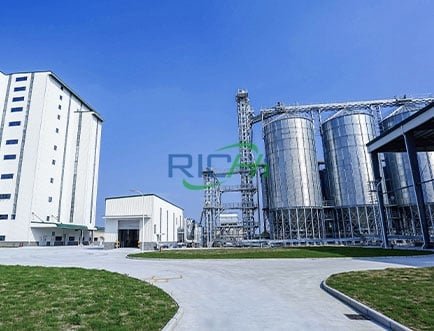
(Related machine: industrial aqua feed plant)
11. Regular Equipment Maintenance Ensures Stable Operation
Even advanced extrusion equipment requires regular maintenance to maintain efficiency.
Important maintenance activities include:
- Checking screw wear
- Inspecting dies
- Lubricating bearings
- Cleaning processing areas
- Replacing damaged components
Poor equipment condition may result in:
- Reduced output
- Higher energy consumption
- Inconsistent pellet quality
Regular maintenance extends equipment service life and ensures reliable production.
12. Quality Monitoring Improves Continuous Optimization
Efficient extrusion requires continuous monitoring and improvement.
Important quality indicators include:
- Pellet density
- Floating time
- Moisture content
- Pellet durability
- Nutritional composition
By analyzing production data, manufacturers can identify problems and optimize operating conditions.
Continuous improvement helps maintain stable feed quality and maximize production efficiency.
How Efficient Fish Feed Extrusion Benefits Aquaculture
Efficient extrusion technology provides significant advantages beyond manufacturing performance.
Improved Feed Utilization
Better pellet quality allows fish to absorb nutrients more effectively.
Reduced Feed Waste
Stable floating pellets reduce nutrient loss and unnecessary consumption.
Better Water Management
Lower feed waste helps maintain cleaner aquaculture environments.
Increased Farm Profitability
Improved feed conversion reduces production costs and increases economic returns.
Therefore, extrusion efficiency directly contributes to the sustainable development of aquaculture.
Future Trends in Fish Feed Extrusion Efficiency
As aquaculture continues to grow, fish feed extrusion technology will become more advanced.
Future developments include:
Intelligent Extrusion Systems
Artificial intelligence and digital monitoring will improve process control.
Energy-Saving Equipment
New equipment designs will reduce power consumption and operating costs.
Sustainable Feed Processing
Extrusion will support the use of alternative ingredients and environmentally friendly formulas.
Customized Feed Production
More precise control will allow manufacturers to produce specialized feed for different aquatic species.
These innovations will further improve the efficiency and sustainability of fish feed production.
Conclusion
Fish feed extrusion efficiency depends on many factors, including raw material quality, formula design, moisture control, temperature management, screw configuration, automation, and equipment maintenance. By optimizing every stage of the production process, manufacturers can produce high-quality feed with better productivity and lower operating costs.
A reliable floating feed extruder machine provides the foundation for efficient floating fish feed production. Through advanced processing control, it improves pellet expansion, water stability, nutrient utilization, and production consistency.
As global aquaculture continues to expand, efficient fish feed extrusion technology will remain essential for producing nutritious, sustainable, and cost-effective feed products that support the future growth of the aquaculture industry.