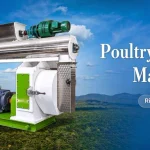
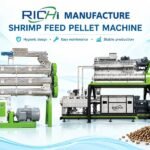
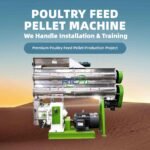

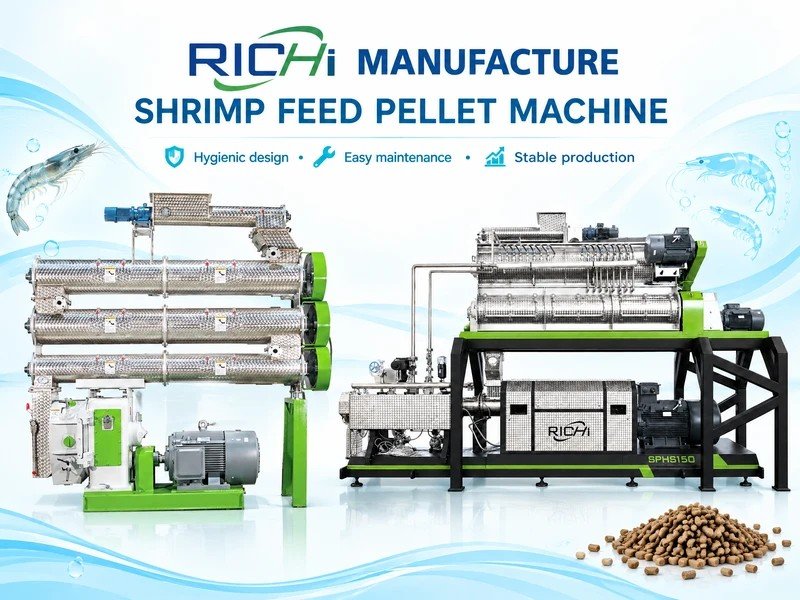
A modern aquatic feed factory needs to coordinate many processes before finished feed reaches a storage warehouse. The shrimp feed pellet machine may be the central forming unit, but the quality and efficiency of the entire operation depend on how well the surrounding equipment is configured.
For this reason, investors planning a new feed factory often need to think in terms of a complete process rather than a single machine.
The Production Process Starts Before Pelleting
Raw materials can include protein meals, grains, binders, oils, vitamins, minerals, and functional additives. These materials may arrive with different particle sizes and physical characteristics.
Grinding prepares the ingredients for later processing. Batching and weighing systems then control the proportions of different ingredients, while a mixer distributes the materials throughout the formulation.
For shrimp feed, fine and consistent particle preparation is especially important because the finished pellets can be relatively small.
Conditioning Prepares the Mixture
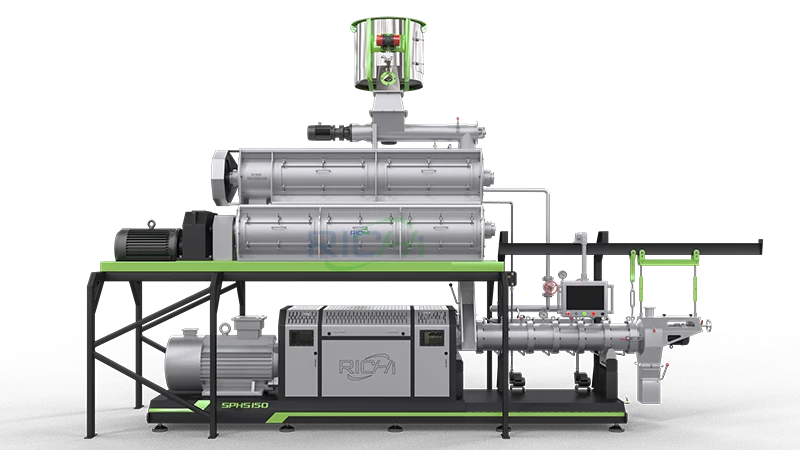
Before pelleting, the feed mixture may pass through a conditioning process where steam and moisture are introduced. Proper conditioning can improve the material’s physical properties and help create more stable pellets.
The exact configuration depends on the formula, production target, and required pellet characteristics. A system designed around the product rather than a generic equipment package is more likely to meet the customer’s actual requirements.
The Pelleting Stage
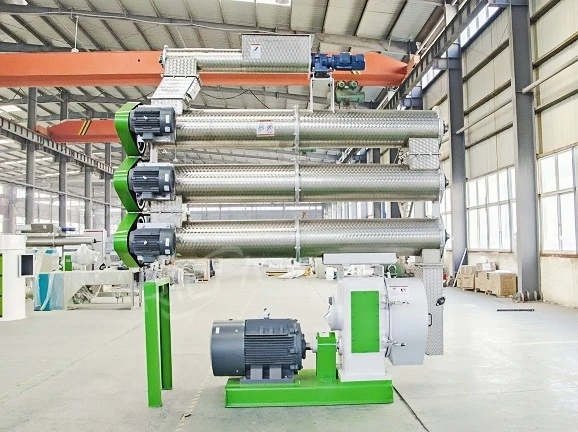
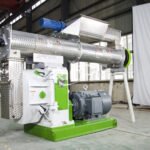
The pellet mill compresses prepared material through a die to form pellets. The die opening and operating conditions influence pellet dimensions, while cutters determine the final length.
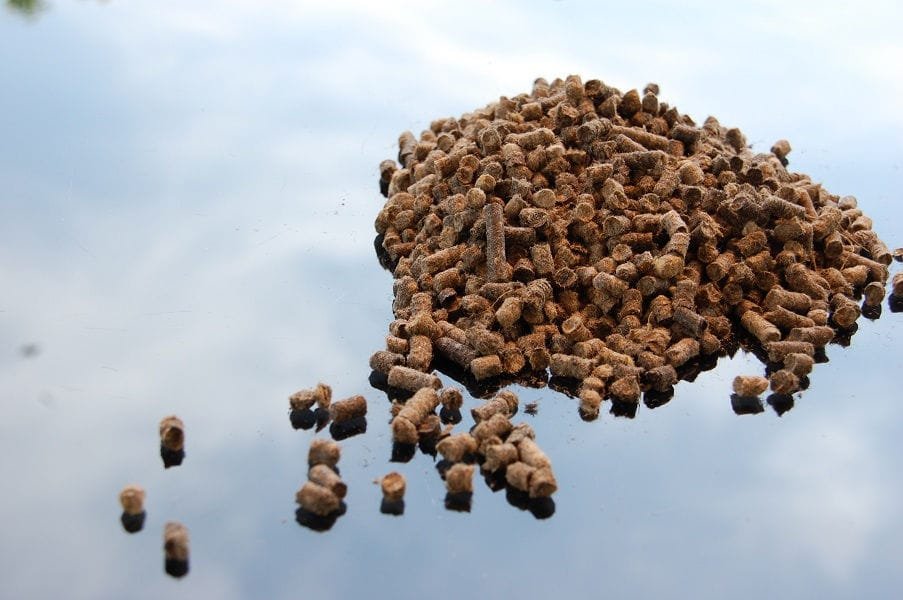
Small shrimp pellets require particular attention because inconsistent formation can affect product quality. The machine must therefore be matched with appropriate raw material preparation, conditioning, die selection, and cutting settings.
Cooling and Screening
Fresh pellets leave the forming stage with elevated temperature and moisture. Cooling helps stabilize them before storage. Screening then separates properly formed pellets from oversized or broken material.
These stages are sometimes underestimated when investors focus mainly on the pellet mill. However, downstream processing can become a production bottleneck if it is not properly matched to the capacity of the forming equipment.
A complete fish feed mill plant should therefore be planned as an integrated system in which each process stage can handle the required material flow.
Material Handling Connects Everything
Conveyors and bucket elevators provide the physical connection between different production stages. Their design affects how smoothly ingredients move through the factory.
Good material handling also reduces unnecessary manual movement. Storage bins, transfer points, feeders, and discharge systems should be positioned according to the factory layout and process sequence.
Packaging Finishes the Process
Once feed has been cooled and screened, it can move toward the finished-product storage and packaging section. Automatic weighing and bagging equipment can improve consistency and reduce repetitive manual work.
Packaging also needs to match the company’s distribution model. A producer selling feed to commercial shrimp farms may require different bagging arrangements from a factory supplying bulk feed to large aquaculture operations.
Consider Future Development
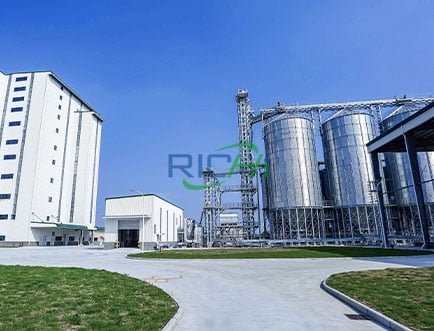
An important site for equipment research should not only explain individual machines but also demonstrate how those machines operate together. When evaluating a supplier, buyers can examine complete project examples, production processes, equipment specifications, and engineering services.
Future expansion should also be discussed at the planning stage. If a business expects demand to increase, the factory layout can reserve space for additional equipment or larger material-handling systems.
The objective is to create a production plant that works efficiently today without making tomorrow’s expansion unnecessarily difficult.
A System Approach to Aquatic Feed
A complete aquatic feed project requires coordination between process design, equipment manufacturing, electrical control, installation, commissioning, and operator training. Each stage contributes to the final production result.
The pelleting machine is important because it creates the finished feed shape, but its performance depends on the preparation and downstream systems around it.
By treating the factory as an integrated production system, investors can make more informed decisions about capacity, automation, layout, maintenance, and future expansion. This approach provides a stronger foundation for producing consistent shrimp and fish feed as the business grows.
View Details: https://www.richimanufacture.com/shrimp-feed-pellet-machine/