Anyone who has tried to budget for a shrimp feed production line knows the frustration. You ask three suppliers for a quote. You get three numbers that are nowhere near each other. One quote is double another. None of them explain why.
This is not because suppliers are hiding something. It is because a shrimp feed pellet line is not a single product. It is a system made up of many components, and the cost depends on dozens of decisions that have to be made before a meaningful price can be given.
Capacity, raw materials, pellet specifications, automation level, local construction costs, and the scope of supply all affect the final number. Two projects that look similar on paper can differ significantly in cost because of decisions that are not visible in a simple equipment list.
This article explains what actually drives the cost of a shrimp feed pellet line, how to read a quotation properly, and what to consider before committing to an investment.
Why There Is No Standard Price
The first thing to understand is that there is no standard price for a shrimp feed pellet line. Unlike a household appliance, a feed production line is configured for a specific project.
A line designed for 1 ton per hour is not simply a smaller version of a line designed for 10 tons per hour. The equipment is different, the layout is different, the automation is different, and the infrastructure requirements are different. Scaling up is not a matter of multiplying the price by ten.
Similarly, a line designed for sinking shrimp feed is not the same as a line designed for floating fish feed. The extruder configuration, the drying system, and the coating equipment all differ. These differences affect cost.
Raw material characteristics also matter. A line that handles high-fat ingredients needs different conveying and storage equipment than a line that handles dry powders. A line that operates in a humid coastal climate needs different moisture control than a line in a dry inland region.
Because of this, any supplier who gives a firm price without asking detailed questions is either guessing or planning to change the price later. A serious quotation is based on a clear specification.
The Main Cost Drivers
Several factors have the largest effect on the total cost of a shrimp feed pellet line.
Capacity. This is the most obvious driver. A higher capacity line requires larger machines, more power, more storage, and more space. Capacity is usually expressed in tons per hour, and the relationship between capacity and cost is not linear. Doubling capacity typically increases cost by less than double, because some components scale more efficiently than others.
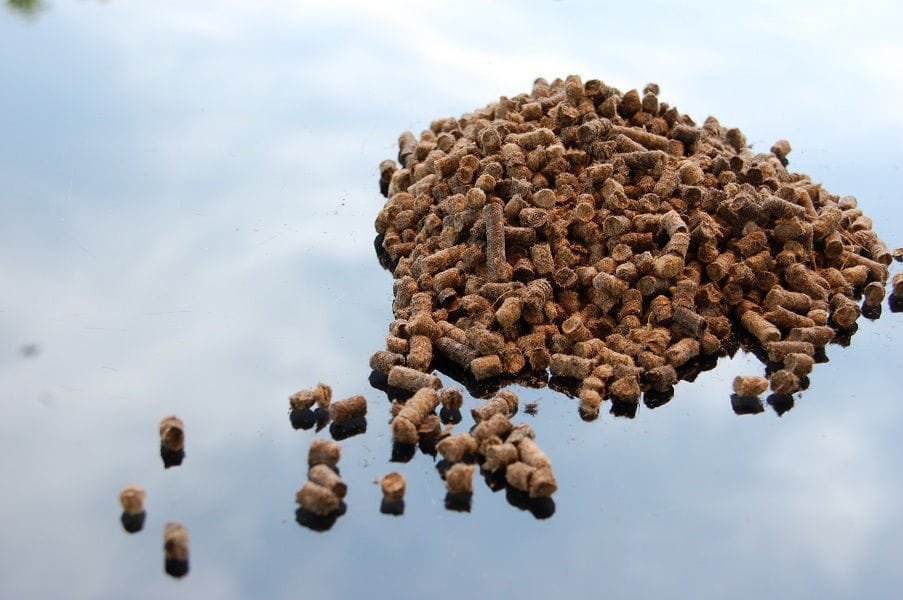
Pellet specifications. Shrimp feed covers a range of pellet sizes, from fine crumbles to larger grow-out pellets. A line that must produce multiple sizes needs more flexibility in the extruder and die configuration. If the required size range is narrow, the equipment can be simpler and less expensive.
Sinking vs. floating. Most shrimp feed is sinking. Sinking pellets require different extrusion and drying settings than floating pellets. Some producers want the ability to make both, which adds cost and complexity.
Automation level. A manual line with basic controls costs less than a line with automated batching, process monitoring, and centralized control. The difference in price can be substantial. The question is whether the automation pays for itself through labor savings, quality consistency, and reduced waste.
Raw material handling. If the line uses a wide range of raw materials, including bulky or abrasive ingredients, the conveying, storage, and grinding equipment must be designed accordingly. This adds cost.
Scope of supply. Some suppliers quote only the core processing equipment. Others include storage silos, conveying systems, boilers, electrical panels, installation, and commissioning. Comparing quotes without checking the scope of supply is misleading.
Local conditions. Civil works, utilities, climate control, and labor costs vary by region. A project in a coastal area with high humidity may need additional moisture control and corrosion protection. A project in a remote area may face higher logistics costs.
Support and service. Installation, commissioning, training, and after-sales support are part of the total cost. Some suppliers include these in the price. Others charge separately. A lower equipment price with poor support may cost more in the long run.
Reading a Quotation Properly
A quotation is not just a price. It is a description of what the supplier will deliver. Reading it carefully prevents misunderstandings later.
Check the capacity. Is the quoted capacity based on the final product or the raw material input? Is it continuous or peak capacity? These details matter.
Check the equipment list. Does the quotation include all the machines needed for the process, or only some of them? Are auxiliary equipment such as conveyors, fans, and pumps included?
Check the specifications. What are the motor powers, the materials of construction, and the control system? A quotation that lists only machine names without specifications is incomplete.
Check the scope of supply. Does the price include installation, commissioning, and training? Does it include spare parts? Does it include documentation?
Check the terms. What are the payment terms, the delivery time, and the warranty? What happens if the equipment does not perform as specified?
Check the assumptions. Every quotation is based on assumptions about raw materials, operating conditions, and site infrastructure. If those assumptions do not match reality, the price may change.
A supplier who is willing to explain these details clearly is more likely to deliver a satisfactory project. A supplier who avoids questions is a risk.
Why Price Lists Are Rarely Useful
Some buyers ask for a shrimp feed pellet machine price list before discussing their project. This is understandable, but it rarely produces useful information.
A price list can only cover standard configurations. If your project does not match the standard configuration, the price list does not apply. And most projects do not match the standard configuration, because raw materials, capacity requirements, and site conditions vary.
A price list also cannot account for the scope of supply. Two suppliers may list the same machine at different prices, but one includes installation and the other does not. The lower price may actually be higher once everything is considered.
That said, a price range can be useful for early budgeting. If you know that a line of a certain capacity typically falls within a certain range, you can plan your investment more realistically. But the range is a starting point, not a final number.
The better approach is to define your project requirements clearly, then ask suppliers to quote against those requirements. This produces comparable quotes and reduces the risk of surprises.
The Hidden Costs
The equipment price is only part of the total investment. Several other costs are often underestimated.
Civil works. The line needs a building, a foundation, and proper drainage. In some cases, the building cost exceeds the equipment cost.
Utilities. Electricity, water, steam, and compressed air are needed. If the site does not have adequate power, upgrading the supply can be expensive.
Installation. Installing a feed line takes time and skilled labor. If the site is remote or access is difficult, installation costs rise.
Commissioning. Getting the line to produce consistent quality takes time. This period may involve adjustments, trials, and training. It should be planned for.
Training. Operators need to understand the equipment and the process. Training is an investment, not an expense.
Working capital. Raw materials, spare parts, and finished goods inventory all require capital. This is often overlooked when planning a project.
Maintenance. Extruder screws, dies, hammers, and screens wear out. A maintenance budget should be part of the operating plan.
Compliance. Depending on the location, feed production may require permits, inspections, and compliance with local regulations. These add cost and time.
When these costs are added together, the total investment can be significantly higher than the equipment price alone. Planning for them from the beginning prevents financial surprises.
How Capacity Affects Cost and Payback
Capacity is the most important variable in the cost equation, but it is not the only one.
A larger line costs more, but it also produces more feed. The question is whether the additional production can be sold or used. If the market cannot absorb the output, the larger line is a waste of money.
A smaller line costs less, but it may not meet future demand. If the farm or feed mill grows, the line may need to be expanded or replaced. This is often more expensive than buying the right capacity from the start.
The practical approach is to size the line for the expected demand over the next several years, with some margin for growth. Designing for slightly higher capacity than current need is usually cheaper than upgrading later.
Payback depends on the difference between the cost of producing feed and the cost of buying it. If the line produces feed at a lower cost than the market price, the savings accumulate over time. The faster the savings accumulate, the shorter the payback.
Several factors affect payback: raw material costs, labor costs, energy costs, capacity utilization, and the market price of feed. A project that looks attractive in one region may not be attractive in another.
What Affects the Price of the Machine Itself
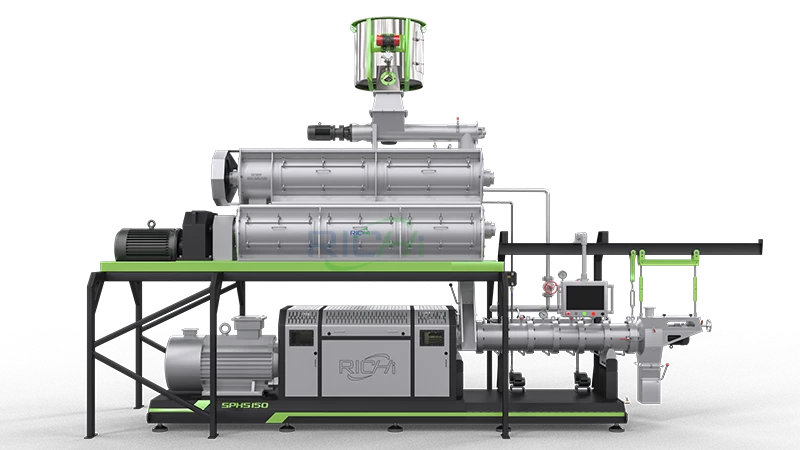
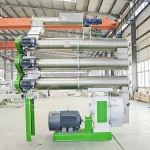
The core processing equipment, including the grinder, mixer, extruder, dryer, and coater, accounts for a large share of the total cost. Several factors affect the price of these machines.
Materials of construction. Equipment made from standard carbon steel costs less than equipment made from stainless steel. Stainless steel is more resistant to corrosion, which matters in humid or coastal environments.
Motor and drive quality. Higher-quality motors and drives cost more but last longer and consume less energy. The difference in operating cost over the life of the machine can exceed the initial price difference.
Control system. A basic control panel costs less than a PLC-based system with data logging and remote monitoring. The choice depends on the required level of process control and the operator’s capability.
Manufacturing quality. Equipment from established manufacturers with proper quality control costs more than equipment from low-cost suppliers. The difference shows up in reliability, spare parts availability, and service.
Customization. Standard equipment costs less than customized equipment. If the project requires special configurations, the price increases.
Certifications and standards. Equipment that meets specific industry standards or certifications may cost more. In some markets, these are required.
When comparing prices, it is important to compare like with like. A lower price may reflect lower specifications, not better value.
Choosing Between New and Used Equipment
Some buyers consider used equipment to reduce the initial investment. This can work, but it comes with risks.
Used equipment may have worn components that need replacement. It may be an older model with less efficient motors or outdated controls. It may not have documentation or spare parts support. And it may not be configured for the specific requirements of shrimp feed.
In some cases, used equipment is a good option, especially if the buyer has technical knowledge and can inspect the equipment before purchase. In other cases, the savings are not worth the risk.
The decision depends on the budget, the timeline, and the buyer’s tolerance for uncertainty. For a new feed mill with no technical staff, new equipment with supplier support is usually the safer choice. For buyers who want to compare new options, a pellet machine for sale from a reputable manufacturer usually comes with better documentation and spare parts support than a used unit.
Financing and Investment Planning
A shrimp feed pellet line is a capital investment. Most buyers do not pay the full amount upfront.
Common arrangements include partial payment on order, payment on delivery, and payment after commissioning. Some suppliers offer financing or work with banks that specialize in equipment financing.
The investment should be evaluated as a business case, not just a purchase. The relevant questions are: How much feed will the line produce? What is the cost per ton? What is the market price? How long until the investment is recovered?
A simple payback calculation can be done with a few numbers. If the line produces 5 tons per hour and operates 8 hours a day, it produces 40 tons per day. If the savings per ton are known, the daily savings can be calculated. Dividing the total investment by the daily savings gives the payback period in days.
This is a simplified calculation, but it illustrates the logic. The details matter, and they should be worked out carefully before committing to a project.
Questions to Ask Before Buying
Before requesting a quote, it helps to have clear answers to several questions.
What capacity is needed? Base this on expected demand, not on wishful thinking.
What pellet sizes are required? This determines the extruder and die configuration.
What raw materials will be used? Local availability and cost affect both equipment selection and operating cost.
What level of automation is appropriate? This depends on labor costs, technical capability, and quality requirements.
What is the site situation? Space, power, water, and access all affect the project.
What is the total budget? Include equipment, civil works, utilities, installation, training, and working capital.
What support is needed? Installation, commissioning, training, and after-sales service should be discussed upfront.
What is the timeline? Manufacturing, delivery, installation, and commissioning all take time. Planning backward from the target start date helps.
With these answers, a supplier can prepare a meaningful quotation. Without them, the quotation is a guess.
If you are unsure about any of these points, it is worth discussing your project with an experienced supplier before making decisions. To request a quotation or discuss your requirements, find here the contact details for project consultation.
Common Mistakes in Budgeting
Several mistakes appear repeatedly when buyers budget for a shrimp feed pellet line.
Focusing only on equipment price. The equipment is only part of the investment. Civil works, utilities, and working capital also matter.
Underestimating installation and commissioning. These stages take time and money. They should be planned for.
Choosing capacity based on price rather than need. A line that is too small will need to be expanded. A line that is too large will sit idle.
Ignoring raw material costs. The line is only part of the cost of production. Raw materials are usually the largest operating expense.
Skipping training. Untrained operators produce inconsistent feed. Training is an investment in quality.
No maintenance budget. Equipment wears out. A maintenance budget keeps the line running.
Comparing quotes without checking scope. Two quotes may look comparable but include very different things.
Avoiding these mistakes is not difficult. It requires attention during the planning stage and a willingness to ask questions.
How to Compare Suppliers
Price is important, but it is not the only factor in choosing a supplier.
Technical capability. Does the supplier understand shrimp feed production? Can they explain the process and recommend appropriate equipment?
Experience. Has the supplier completed similar projects? Can they provide references?
Support. Does the supplier provide installation, commissioning, training, and after-sales service?
Spare parts. Are spare parts available locally or regionally? How long does delivery take?
Communication. Does the supplier respond to questions clearly and promptly? This matters during the project and after.
Terms. Are the payment terms, delivery time, and warranty reasonable?
Total cost. What is the total cost of ownership, including maintenance, energy, and spare parts?
A supplier who scores well on these factors is likely to deliver a better project, even if the initial price is higher. A supplier who offers a low price but weak support may cost more over time.
For buyers who are serious about getting the right equipment, a shrimp feed pellet machine price is only one part of the decision. The bigger question is whether the equipment and the supplier can deliver consistent production over the life of the project.
The Long-Term View
A shrimp feed pellet line is a long-term asset. It will operate for many years, producing feed for farms that depend on it.
The decisions made during the planning stage affect performance for the life of the line. Capacity, automation, raw material handling, and support all matter. Getting these decisions right is more important than saving a small amount on the initial price.
Buyers who take a long-term view tend to invest in quality equipment, proper installation, and good support. They see the payback over years, not months. They understand that a reliable line is worth more than a cheap one.
Buyers who focus only on the lowest price often find that the savings are offset by downtime, poor quality, and higher operating costs. The cheapest line is rarely the most economical.
Final Thoughts
The cost of a shrimp feed pellet line depends on many factors: capacity, pellet specifications, automation, raw material handling, scope of supply, and local conditions. There is no standard price because there is no standard project.
To get a meaningful quotation, define your requirements clearly and ask suppliers to quote against them. Compare not just prices but scope, specifications, support, and terms.
Budget for the full investment, not just the equipment. Civil works, utilities, installation, training, and working capital are all part of the project.
And remember that the goal is not to buy the cheapest line. The goal is to build a line that produces consistent, high-quality feed at a cost that supports the business. That is the investment that pays off.