


Agricultural straw is one of the most abundant forms of biomass residue available in many farming regions. Wheat straw, rice straw, corn stalks, barley straw, oat straw, sorghum stalks, and other crop residues are generated every year after harvesting. Although these materials contain usable organic matter and energy, loose straw is often difficult to transport, store, handle, and feed into conventional biomass combustion systems.
Straw pelletizing provides a practical way to transform this low-density agricultural residue into a more standardized solid biomass fuel.
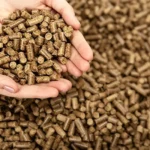
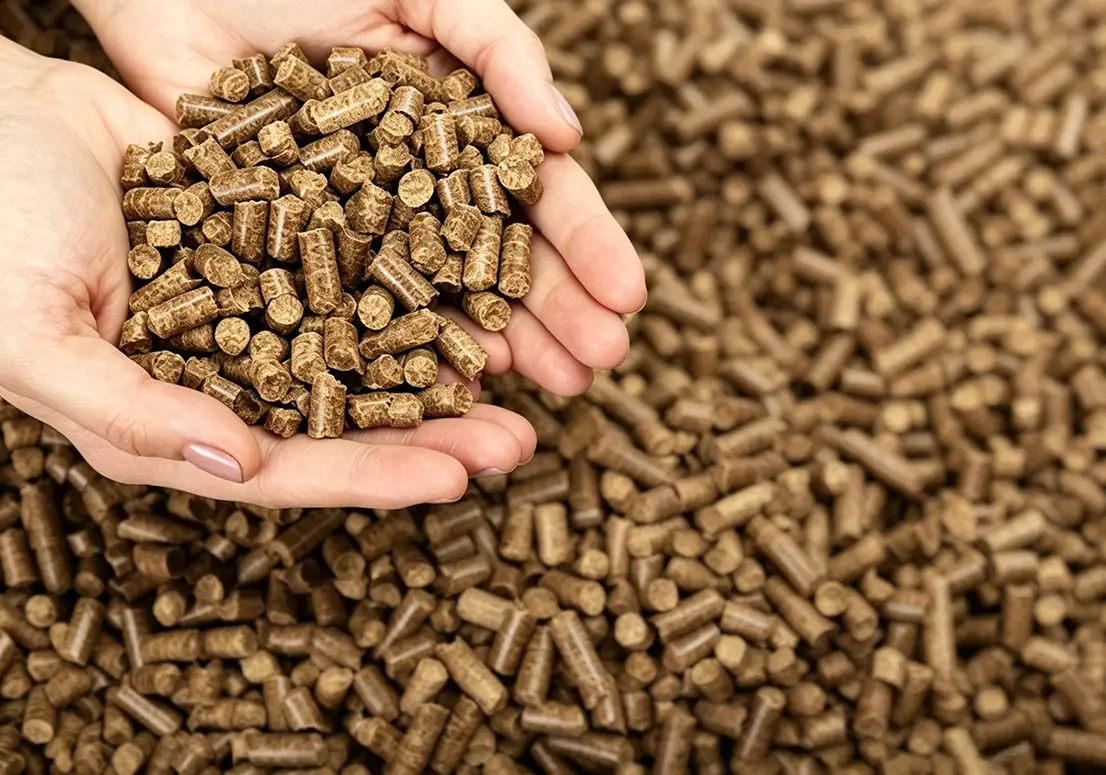
By using mechanical compression, a pellet production system converts prepared straw into dense cylindrical pellets. The resulting product has a much higher bulk density than loose straw and can be easier to transport, store, meter, and use in suitable biomass heating systems.
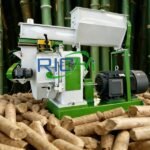
This is where a straw pellets machine becomes important. The machine does not create energy that was not already present in the biomass. Instead, it changes the physical form of the material, making the existing biomass resource more convenient and potentially more valuable as a fuel.
However, the improvement in fuel value is not determined by pelletizing alone. Moisture content, ash content, raw material quality, processing energy, transportation distance, pellet durability, and combustion technology all influence the practical value of straw pellets.
This article explains how straw pelletizing can improve biomass fuel value, what changes during the pelletizing process, and what producers should consider when designing a commercial straw pellet production line.
What Is Biomass Fuel Value?
Before discussing pelletizing, it is useful to understand what fuel value means.
Biomass fuel value can refer to several related characteristics, including:
- Energy content
- Heating value
- Bulk density
- Storage stability
- Transportability
- Combustion consistency
- Handling convenience
- Feeding performance
- Moisture content
- Ash characteristics
The chemical energy contained in straw primarily comes from organic compounds such as cellulose, hemicellulose, and lignin.
Pelletizing does not significantly increase the intrinsic chemical energy of the dry biomass. Instead, it improves the physical fuel properties of the material.
This distinction is important.
For example, one kilogram of dry straw does not suddenly contain substantially more chemical energy simply because it has been compressed into pellets. However, one cubic meter of pellets can contain much more biomass energy than one cubic meter of loose straw because the pellets occupy less volume.
Therefore, pelletizing can improve the practical fuel value of agricultural residues.
Why Loose Straw Has Limited Fuel Value
Loose straw can contain considerable energy, but its physical characteristics create several challenges.
Low Bulk Density
Loose straw contains a large amount of air between fibers.
This results in low bulk density.
A large storage volume may therefore be required to hold a relatively small mass of material.
Difficult Transportation
Because loose straw occupies a large volume, trucks may reach their volume limit before reaching their maximum payload.
This can increase transportation costs per unit of useful biomass.
Difficult Feeding
Loose fibers can bridge, tangle, or become difficult to meter.
Many combustion systems require a more consistent fuel form.
Storage Challenges
Loose straw takes up considerable space and can be difficult to handle with automated systems.
Variable Moisture
Straw stored outdoors may absorb moisture from rain or humid air.
Higher moisture reduces the useful energy available per unit of wet fuel because part of the combustion energy must effectively be used to evaporate water.
Pelletizing addresses many of these physical limitations.
How Straw Pelletizing Changes Biomass
The pelletizing process typically involves several stages:
Straw Collection → Cleaning → Bale Breaking → Shredding → Drying → Grinding → Pelletizing → Cooling → Screening → Packaging
During the process, straw undergoes several physical changes.
It becomes:
- Smaller
- More uniform
- Denser
- Easier to handle
- Easier to transport
- Easier to meter
The most important transformation occurs during compression.
Prepared straw enters the pellet mill, where rollers compress the material through holes in a die.
The result is a compact cylindrical pellet.
1. Pelletizing Increases Bulk Density
One of the most important advantages of straw pellets is increased bulk density.
Loose straw contains large air spaces.
During pelletizing, mechanical pressure removes much of this empty space.
The biomass particles are compressed into a compact structure.
This means more kilograms of biomass can be stored in the same physical volume.
Why Does Higher Bulk Density Matter?
Higher bulk density improves several aspects of fuel logistics.
It can reduce:
- Storage volume
- Transportation volume
- Handling requirements
- Feeding space
- Loading and unloading complexity
For commercial biomass fuel producers, this can have a major impact on logistics.
2. Pelletizing Improves Transportation Efficiency
Transportation is often an important cost in biomass utilization.
Loose straw is bulky.
Even when the actual mass is relatively low, the material can occupy substantial truck space.
Straw pellets are much more compact.
As a result, more biomass can be transported in a given volume.
This can make it easier to move agricultural residues from farms or collection centers to pellet plants and then from pellet plants to end users.
The economic benefit depends on transportation distance, local freight rates, pellet density, and fuel market prices.
3. Pelletizing Improves Storage Efficiency
Storage is another major advantage.
Loose straw requires large storage buildings or open storage areas.
Pellets are much more compact.
A properly designed storage facility can therefore hold more biomass energy in a smaller footprint.
This is particularly useful where land or warehouse space is expensive.
However, pellets still need protection from water and excessive humidity.
Biomass pellets can absorb moisture, which may reduce their mechanical strength and affect storage quality.
4. Pelletizing Improves Fuel Handling
Loose straw is difficult to handle automatically.
Long fibers can become tangled and may not flow smoothly.
Pellets are much more uniform in shape and size.
This allows them to be handled using:
- Screw conveyors
- Belt conveyors
- Bucket elevators
- Storage bins
- Automatic feeders
- Bulk loading systems
A more standardized fuel form makes automation easier.
5. Pelletizing Improves Feeding Consistency
Combustion equipment generally performs better when fuel is supplied at a relatively stable rate.
Loose straw can create inconsistent feeding because its bulk density and physical shape vary.
Pellets have a more consistent geometry.
This makes it easier for feeding systems to control fuel flow.
Stable feeding can contribute to more consistent combustion conditions.
6. Pelletizing Can Improve Combustion Consistency
Straw pellets are more uniform than loose agricultural residues.
The pelletizing process controls:
- Particle size
- Pellet diameter
- Pellet length
- Bulk density
- Moisture condition
This does not mean every pellet has exactly the same properties, but the product is generally much more standardized than raw loose straw.
A more uniform fuel can help combustion systems maintain more predictable operation.
Actual combustion performance depends on the boiler or stove design and the fuel specifications.
7. Pelletizing Reduces the Influence of Excessive Moisture
Moisture is one of the most important factors affecting biomass fuel performance.
Wet biomass contains water that must be heated and evaporated during combustion.
This reduces the useful heat available from the fuel.
Before pelletizing, straw can be dried to an appropriate moisture level.
A rotary dryer is often used in commercial plants when the incoming material is too wet.
The drying process therefore helps produce a more stable fuel.
However, drying also consumes energy.
The overall energy benefit of pellet production depends on the efficiency of the drying system and the initial moisture content of the straw.
8. Pelletizing Helps Standardize Pellet Size
Fuel users often prefer standardized biomass products.
Pellet diameter can be controlled by selecting an appropriate die.
Common pellet diameters are several millimeters, although the actual specification depends on the application and equipment.
Standardized pellet size can make it easier to design and adjust feeding systems.
It also makes the product more convenient for commercial fuel distribution.
9. Pelletizing Improves Mechanical Durability
A properly produced pellet should have sufficient mechanical strength to withstand:
- Conveying
- Screening
- Bagging
- Transportation
- Loading
- Unloading
High levels of fines can create handling problems.
Pellet durability depends on several factors, including:
- Moisture
- Raw material composition
- Particle size
- Die compression
- Roller condition
- Cooling
- Handling
Therefore, a high-quality pelletizing system should optimize the entire process rather than focusing only on compression.
10. Pelletizing Can Reduce Agricultural Waste Disposal Problems
One of the broader benefits of straw pelletizing is improved utilization of agricultural residues.
Farmers may generate large quantities of straw after harvesting.
Without a suitable utilization pathway, straw can become a disposal challenge.
Pellet production provides an alternative route.
Instead of treating straw simply as waste, it can become a feedstock for biomass fuel production.
This creates a link between agricultural production and renewable energy markets.
How Straw Pellets Compare With Loose Straw
The difference between loose straw and pellets is mainly physical.
| Characteristic | Loose Straw | Straw Pellets |
|---|---|---|
| Bulk density | Low | Much higher |
| Transportation | Bulky | More compact |
| Storage | Space-intensive | More space-efficient |
| Feeding | Less consistent | More uniform |
| Handling | Fibrous | Easier to automate |
| Particle form | Irregular | Standardized |
| Moisture control | Variable | More controllable |
| Packaging | Difficult | Easy to standardize |
This comparison explains why pelletizing can increase the practical value of straw as a fuel.
Does Pelletizing Increase the Heating Value of Straw?
This question requires an important distinction.
Pelletizing itself does not dramatically increase the intrinsic heating value of the dry organic matter.
Instead, it improves the energy density per unit of volume.
Drying can increase the heating value per kilogram of the final product compared with wet straw because less energy is associated with water.
But drying does not create new chemical energy either.
Therefore, the main fuel-value improvements from pelletizing are:
- Higher bulk density
- Lower and more controlled moisture
- Better handling
- Better transport efficiency
- More consistent feeding
- More standardized fuel quality
The Role of Moisture in Straw Pellet Fuel Value
Moisture deserves special attention.
Suppose two batches contain the same amount of dry biomass.
If one batch contains significantly more water, the wetter fuel will generally provide less useful heat per kilogram of as-received material.
Water must be heated and evaporated during combustion.
This is why moisture management is essential.
A straw pellet production line typically includes a dryer when raw material moisture is too high.
The target moisture should be determined according to the pelletizing process and final fuel requirements.
Over-drying should also be avoided because it increases thermal energy consumption and may negatively affect pellet formation.
The Role of Ash Content
Straw is not identical to wood.
Many agricultural residues can have relatively high ash content, depending on crop type, soil contamination, harvesting method, and raw material cleanliness.
Ash can affect:
- Combustion behavior
- Boiler maintenance
- Slagging
- Fouling
- Ash disposal
For this reason, pellet producers should analyze the raw material before investing in a large production line.
Cleaning the straw can help reduce contamination from soil and sand, although it cannot eliminate the naturally occurring mineral content of the plant material.
Why Raw Material Preparation Matters
The final fuel quality begins before pelletizing.
A typical preparation process includes:
Cleaning
↓
Bale Breaking
↓
Shredding
↓
Drying
↓
Grinding
↓
Moisture Adjustment
↓
Pelletizing
Each stage affects the final pellet.
For example, long fibers can cause unstable feeding.
High moisture can reduce pellet quality.
Large particles can create uneven compression.
Contamination can increase equipment wear.
Therefore, the pelletizing machine is only one part of the fuel production system.
How a Straw Pellets Machine Contributes to Fuel Value
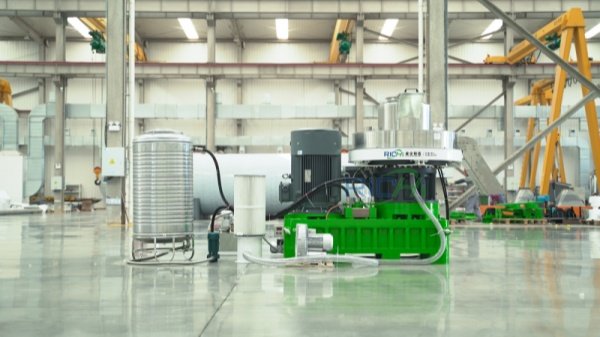
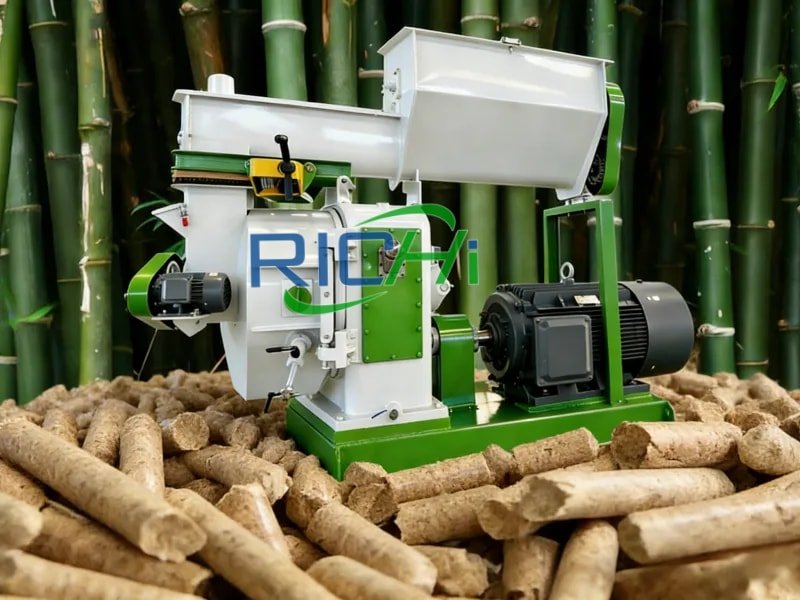
A straw pellets machine is the core equipment used to densify prepared agricultural residues.
The machine compresses straw particles under pressure and forces them through a die.
Several factors determine pellet quality.
Die Compression Ratio
The die determines the resistance applied to the material.
Different straw types may require different compression ratios.
Roller Condition
The rollers must maintain appropriate contact with the die.
Worn rollers can reduce production efficiency.
Feeding Rate
The pellet mill should receive a stable supply of material.
Moisture
The raw material must be within an appropriate moisture range.
Particle Size
The particles should be suitable for the selected die.
These parameters must be coordinated to achieve stable pellet production.
(Learn more:https://richipelletizer.com/straw-pellet-machine-for-sale/)
How Pelletizing Can Improve Biomass Fuel Logistics
Fuel value should not be considered only in terms of laboratory heating value.
For commercial users, logistics can have a major influence on the actual economic value of biomass.
Imagine two fuel sources with similar energy content per kilogram.
One is loose straw.
The other is compact pellets.
The pellet product may be easier to:
- Store
- Transport
- Load
- Unload
- Meter
- Sell
- Package
These practical advantages can make pelletized biomass more commercially useful.
Straw Pelletizing and Energy Density
Energy density can be considered in two ways.
Gravimetric Energy Density
This refers to energy per unit mass.
Drying can influence this because lower moisture generally means more useful energy per kilogram of wet fuel.
Volumetric Energy Density
This refers to energy per unit volume.
Pelletizing has a much more direct effect here because compression substantially increases bulk density.
This distinction explains why pellets are easier to transport and store even though the chemical energy of the dry biomass has not been dramatically changed.
How Pelletizing Supports Automated Biomass Heating
Automated combustion systems require predictable fuel feeding.
Pellets are well suited to automated systems because their uniform shape allows controlled mechanical feeding.
Possible systems include:
- Screw feeders
- Hopper feeders
- Automatic fuel conveyors
- Bulk storage bins
- Automated boiler feeding systems
Loose straw is generally more difficult to meter continuously.
Pelletizing therefore expands the range of biomass handling systems that can potentially use agricultural residues.
How Pelletizing Creates a Marketable Biomass Product
Loose straw is often considered a low-value agricultural residue because of its transportation and handling limitations.
Pelletizing changes its commercial form.
Instead of selling loose agricultural residue, a producer can create a standardized biomass fuel product.
A commercial pellet product can be defined by:
- Pellet diameter
- Moisture
- Bulk density
- Durability
- Ash content
- Heating value
- Packaging
- Fines content
This standardization can make it easier to market the material to industrial or commercial fuel users.
Economic Factors Affecting Straw Pellet Fuel Value
Pelletizing does not automatically guarantee profitability.
The economics depend on several factors.
Raw Material Cost
Locally available straw may be inexpensive, but collection and preparation still cost money.
Collection and Transportation
Straw must be collected and transported to the pellet plant.
Drying Cost
Wet straw requires thermal energy for drying.
Electricity
Grinding and pelletizing consume electricity.
Equipment Investment
A complete pellet plant requires investment in:
- Preparation equipment
- Dryer
- Pellet mill
- Cooler
- Screen
- Conveyors
- Packing system
- Dust collection
- Electrical control
Maintenance
Dies, rollers, bearings, belts, and other components require regular maintenance.
Fuel Selling Price
The market price of finished straw pellets is critical to project economics.
Therefore, a feasibility study should evaluate the complete supply chain rather than only the cost of the pellet machine.
How to Improve the Fuel Value of Straw Pellets
Several practices can help produce a more useful biomass fuel.
Use Clean Raw Material
Reduce soil, stones, metal, and other contaminants.
Control Moisture
Avoid both excessive moisture and unnecessary over-drying.
Optimize Particle Size
Use suitable shredding and grinding.
Select the Correct Die
Match compression characteristics to the straw.
Maintain the Pellet Mill
Keep rollers, die, bearings, and drive components in good condition.
Cool Pellets Properly
Cooling improves handling and storage stability.
Screen Finished Pellets
Remove excessive fines and broken pellets.
Store Pellets Properly
Protect the product from water and excessive humidity.
Equipment Needed for Straw Fuel Pellet Production
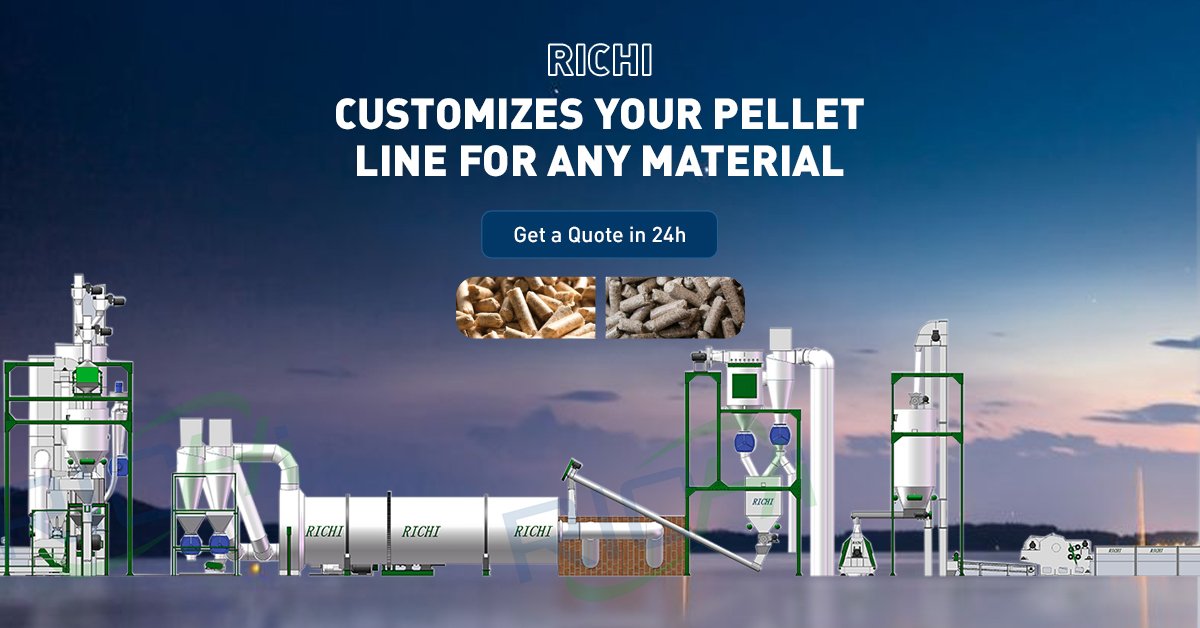
A commercial straw fuel pellet line may include:
- Straw receiving system
- Cleaning screen
- Magnetic separator
- Bale breaker
- Straw shredder
- Rotary dryer
- Hammer mill
- Buffer hopper
- Controlled feeder
- Straw pellets machine
- Pellet cooler
- Vibrating screen
- Conveyors
- Packing machine
- Dust collection system
- Electrical control system
The actual equipment list should be customized according to the raw material and required output.
Why Complete Line Design Is Important
A pellet mill cannot compensate for poor raw material preparation.
For example, a high-capacity pellet mill may be unable to reach its expected output if:
- The dryer is too small
- The grinder is undersized
- Moisture fluctuates significantly
- Feeding is unstable
- The cooler cannot handle the output
- Screening capacity is insufficient
Therefore, the entire production line should be balanced.
A turnkey engineering approach can evaluate the complete process from raw material receiving to finished pellet packaging.
(click to investigate:RICHI Pelletizer)
Environmental Considerations
Straw pelletizing can support better utilization of agricultural residues, but the environmental performance of a project depends on the complete system.
Important factors include:
- Straw collection distance
- Transportation fuel
- Drying energy source
- Electricity consumption
- Combustion efficiency
- Ash management
- Dust control
- Equipment efficiency
The environmental benefit is therefore not simply a result of calling the product “biomass.”
A well-designed system should consider the full production and energy chain.
Frequently Asked Questions
Does pelletizing increase the energy content of straw?
Pelletizing mainly increases the physical density and usability of straw rather than creating additional chemical energy. Drying can reduce moisture and improve energy content per kilogram of as-received fuel.
Why are straw pellets easier to transport?
Pellets have a much higher bulk density than loose straw, allowing more biomass to be transported within a given volume.
Can all types of straw be pelletized?
Many agricultural residues can be pelletized, but different straw types require different preparation, moisture control, grinding, and die conditions.
Does straw need to be dried before pelletizing?
If the incoming straw is too wet, drying is generally required. The actual target depends on the raw material and pelletizing system.
What machine is used to make straw fuel pellets?
A biomass pellet mill or straw pellets machine is used to compress prepared straw into pellets.
Why is pellet cooling necessary?
Fresh pellets leave the pellet mill hot. Cooling helps stabilize the pellets and makes them more suitable for screening, packaging, transportation, and storage.
Can straw pellets be stored for long periods?
They can be stored when properly produced and protected from water and excessive humidity. Storage conditions strongly affect pellet quality.
Does straw pelletizing reduce transportation costs?
It can improve transportation efficiency because pellets are much denser than loose straw. Actual savings depend on transportation distance, freight rates, bulk density, and other logistics factors.
Conclusion
Straw pelletizing improves the practical fuel value of agricultural residues primarily by transforming low-density, irregular biomass into a denser and more standardized fuel.
The process does not magically create additional chemical energy. Instead, it improves the physical properties that determine how easily biomass can be transported, stored, handled, fed, and used.
The major benefits include:
- Higher bulk density
- Improved volumetric energy density
- Better transportation efficiency
- More efficient storage
- More consistent fuel feeding
- Better handling
- Standardized pellet size
- Improved mechanical durability
- Better moisture control
- Greater commercial usability
A well-designed straw pellets machine and complete pellet production line can turn wheat straw, rice straw, corn stalks, barley straw, and other agricultural residues into a more convenient biomass fuel.
However, the pelletizing machine is only one part of the solution. Raw material cleaning, bale breaking, shredding, drying, grinding, feeding, cooling, screening, and storage all influence the final fuel product.
For investors, the key is therefore to evaluate the entire process—from agricultural residue collection to finished pellet delivery. When raw material quality, moisture, particle size, equipment selection, energy consumption, and logistics are properly managed, straw pelletizing can provide a practical route for converting agricultural residues into a denser, easier-to-handle, and potentially more marketable biomass fuel.