
You’ve done everything right. The genetics are solid. The barn environment is dialed in. The lighting program follows the recommendations. The vaccination schedule is current. And still, the birds aren’t performing the way they should. Growth is uneven. Feed conversion is higher than expected. Mortality is creeping up. The numbers don’t add up, and you’re left wondering what’s missing.
The answer might be hiding in plain sight—in the feed room. Not in the formulation, necessarily. Not in the ingredients. But in the consistency of the feed itself. Variations in pellet quality, particle size, and nutrient distribution can affect flock performance in ways that are difficult to pinpoint but very real in their impact.
Commercial feed mills produce feed in large batches. The equipment is designed for high throughput, not necessarily for the precision that a specific flock might need. The feed that arrives on your farm might be good enough, but “good enough” doesn’t maximize performance. And when margins are tight, leaving performance on the table is a luxury you can’t afford.
The Consistency Question
Feed consistency matters more than most producers realize. Birds respond to consistency. They eat more when the feed is uniform. They digest more efficiently when the particle size is consistent. They grow more evenly when every bird gets the same nutritional profile.
Variations in feed quality can come from several sources. The grinding step might produce inconsistent particle sizes. The mixing might not be thorough. The conditioning might be uneven. The die might be worn, producing pellets of varying density. The result is feed that varies from one bag to the next, or even within the same bag.
For a flock of 50,000 birds, even a small variation in feed quality can have a measurable impact. A 1% difference in feed conversion translates to tons of extra feed over a grow-out. A 1% difference in mortality translates to hundreds of birds. The financial impact of inconsistency is real.
The Production Line Approach
Producing feed on-site with a dedicated line eliminates many of the sources of variation. The line is set up for your specific formulation. The equipment is maintained for your specific requirements. The quality control is under your control.
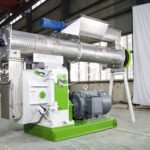
A poultry feed production line includes the equipment needed for grinding, mixing, conditioning, pelleting, cooling, and screening. Each stage contributes to the final product quality. The integration of the stages ensures that the material flows smoothly from one step to the next.
The grinding stage reduces the ingredients to a consistent particle size. The grinding equipment is set up for the specific material and the target particle size. The consistency of the grind affects the subsequent stages and the final pellet quality.
The mixing stage blends the ground ingredients with the other components. The mixing must be thorough to ensure that each pellet contains the correct balance of nutrients. The mixing time and speed are adjusted for the specific ingredients.
The conditioning stage adds steam to the mixed material. The conditioning softens the particles and activates the natural binders. The temperature and moisture are controlled to achieve the optimal condition for pelleting.
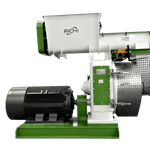
The pelleting stage compresses the conditioned material through a die. The die hole diameter determines the pellet size. The compression ratio affects the pellet durability. The pelleting stage is where the final form of the feed is determined.
The cooling stage reduces the temperature and moisture content of the pellets. The cooling hardens the pellets and prepares them for storage. The cooling time and airflow are controlled to achieve the target moisture content.
The screening stage removes fines from the finished pellets. The fines are returned to the process. The screening ensures that the finished product meets the quality specifications.
The Role of Automation
Automation in a poultry feed production line reduces the potential for human error. The automated system monitors the process parameters and adjusts them as needed. The consistency of the product improves.
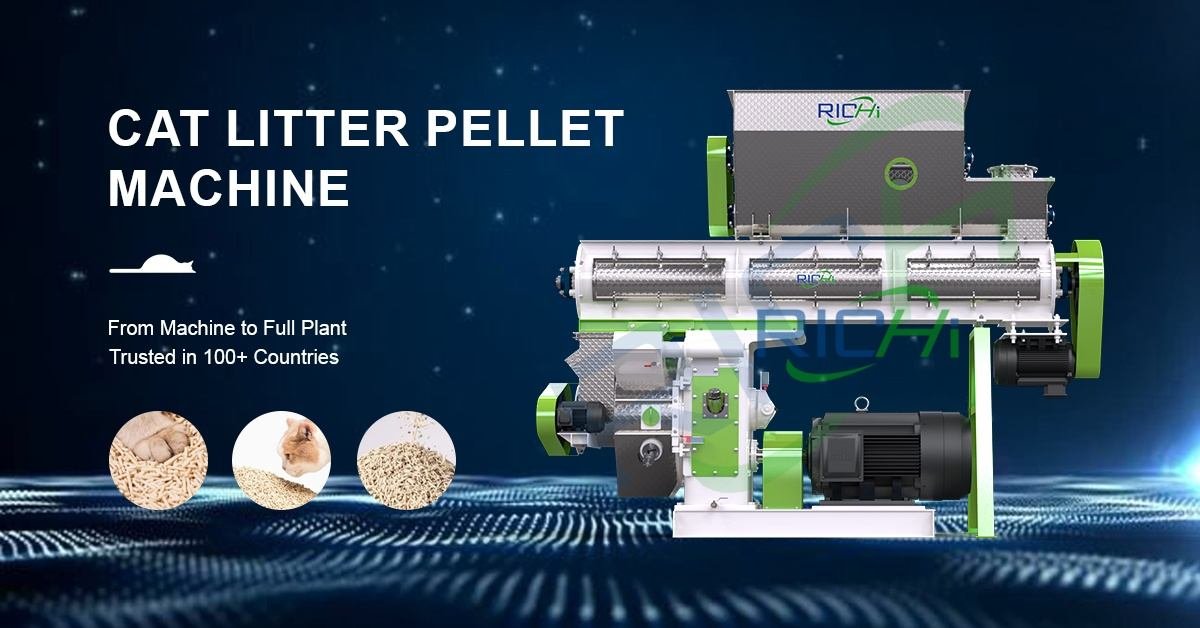
An automatic poultry feed pellet making machine includes sensors and control systems that manage the feed rate, conditioning temperature, and pressure. The machine adjusts its operation based on the characteristics of the incoming material. The result is consistent pellet quality from batch to batch.
The automatic machine reduces the labor required. The operator sets the parameters, and the machine runs the process. The operator monitors the output and makes adjustments as needed. The labor cost per ton of feed is lower than with a manual system.
The automatic machine also improves safety. The machine can detect conditions that might lead to equipment damage or operator injury. It can shut down automatically if necessary.
The Scale Decision
The scale of the production line depends on the feed requirements. A small line might produce a few hundred kilograms per hour. A large line might produce several tons per hour.
A pellet line for sale is available at various capacities. The selection of the capacity should be based on the current feed requirements and the expected growth of the operation. A line that’s too small will run constantly, leading to premature wear. A line that’s too large will require more capital than necessary.
The smaller line is suitable for an operation with a few thousand birds. The equipment is compact and affordable. The production can be scheduled to meet the daily feed requirements.
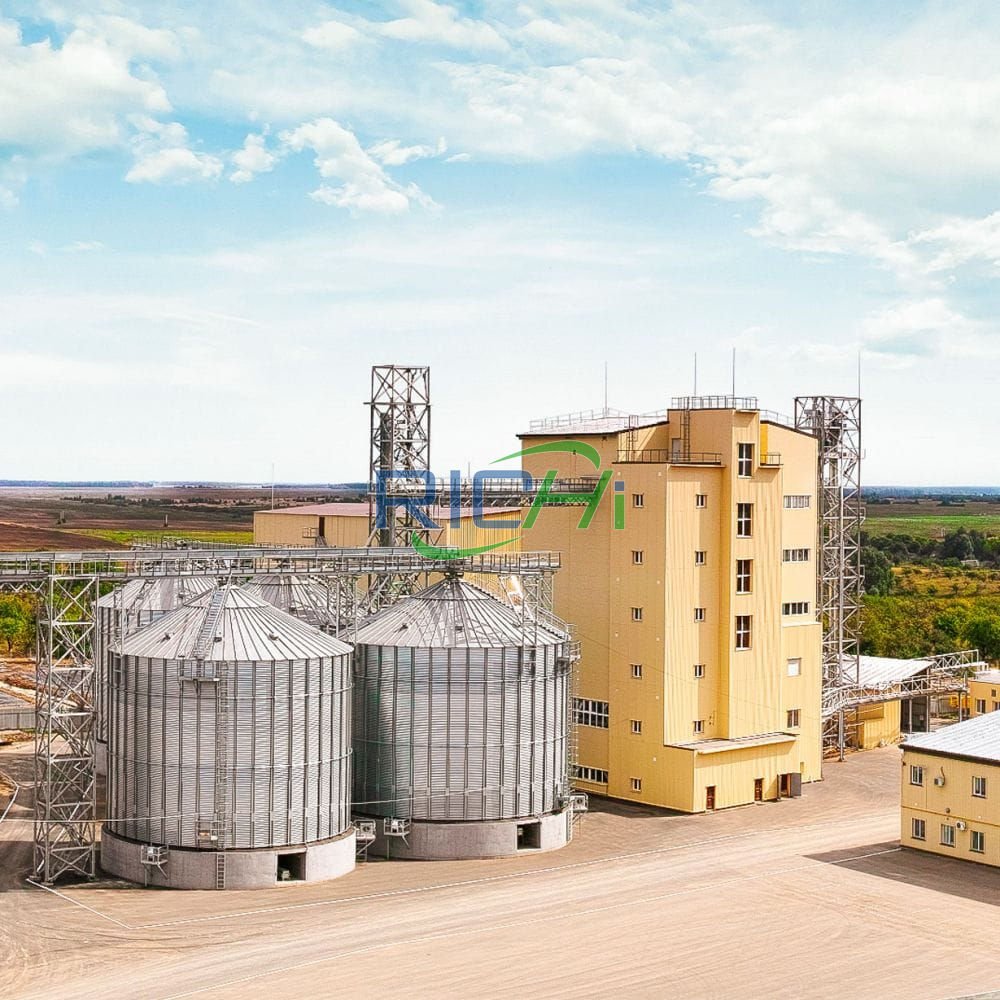
The larger line is suitable for a commercial feed mill or a large integrated operation. The equipment is heavy-duty, built for continuous operation. The production can be scheduled around the clock to meet the feed requirements of multiple flocks.
The Quality Control Program
The quality control program for a poultry feed production line includes testing at several stages. The incoming ingredients should be tested for moisture content and quality. The grinding should be checked for particle size. The mixing should be checked for uniformity.
During pelleting, the conditioning temperature and moisture should be monitored. The pellet durability should be tested regularly. The pellet size should be checked for consistency.
The finished pellets should be tested for moisture content, durability, and nutrient composition. The fines content should be measured. The appearance and smell of the pellets should be checked.
The quality control program should be documented. The records help identify trends and prevent problems. The documentation provides evidence of quality for customers and regulatory authorities.
The Economic Impact
The investment in a production line must be justified by the expected return. The savings come from several sources: reduced feed costs, improved feed efficiency, and better flock performance.
The reduced feed costs come from eliminating the commercial mill’s markup. The ingredients cost less than the purchased feed. The savings per ton typically range from 15% to 25%.
The improved feed efficiency comes from the consistency of the pellets. The birds convert the feed more efficiently. The reduction in feed conversion can be 5% to 10% compared to commercial feed.
The better flock performance comes from the uniformity of the birds. The mortality may be lower. The growth may be more even. The overall return from the flock improves.
The payback period for a production line depends on the volume of feed produced and the savings per ton. For many operations, the payback period is two to three years.
The Manufacturer’s Role
The manufacturer of the equipment affects the success of the operation. A manufacturer with experience in poultry feed production can provide guidance on equipment selection and configuration. The manufacturer can help design a line that meets the specific production requirements.
The manufacturer’s technical support is important. The operation of a production line requires some expertise. The manufacturer should provide training and ongoing assistance. The availability of spare parts is another factor to consider.
Click here for more info to explore equipment options and configurations for poultry feed production. The right equipment, properly operated, improves feed efficiency and reduces production costs.
The Path Forward
The consistency of feed affects the consistency of flock performance. A poultry feed production line gives the producer control over the feed quality. The line includes the equipment for grinding, mixing, conditioning, pelleting, cooling, and screening. The automation of the line reduces the potential for human error.
The investment in a production line is justified by the savings in feed costs and the improvement in flock performance. The payback period for a well-sized line is typically two to three years. For poultry producers looking to improve their operations, a production line offers a path to better control and better results.