

Can Biomass Pellets Help Build a Cleaner Energy Future?
The global energy system is gradually moving toward a more diverse mix of renewable resources. Solar and wind power have become increasingly important for electricity generation, while biomass continues to attract attention in applications where a storable and transportable solid fuel is needed.
One interesting feature of biomass energy is that it can make use of materials that are already being generated by agriculture and forestry. Instead of treating every residue as waste, some organic materials can be processed into useful fuels.
Palm oil production provides a good example. Large quantities of empty fruit bunches, commonly known as EFB, are generated during palm oil processing. Because EFB is bulky and contains considerable moisture when freshly produced, handling it can be challenging. Pelletization offers one potential method of transforming this agricultural residue into a denser and more manageable fuel.
But what makes biomass suitable for energy production? Does pelletization actually improve its energy value? How much processing is required before agricultural residues can become fuel?
This article looks at these questions from an energy and resource-utilization perspective.
What Exactly Is Biomass Energy?
Biomass energy refers to energy derived from organic materials.
Plants capture solar energy through photosynthesis and store part of that energy in chemical bonds. When plant-derived biomass is used as fuel, this stored chemical energy can be released through combustion or other conversion processes.
Common biomass resources include:
- Wood residues
- Sawdust
- Forestry by-products
- Crop residues
- Rice husks
- Corn stalks
- Sugarcane residues
- Palm oil processing residues
- Agricultural processing waste
The important point is that biomass is not a single type of fuel.
Different materials have different moisture levels, ash contents, heating values, densities, and chemical compositions. These differences influence how they should be processed and how they behave during combustion.
Therefore, the energy potential of biomass needs to be evaluated according to its specific source and characteristics.
Why Are Agricultural Residues Interesting as Energy Resources?
Agricultural residues are generated continuously wherever crops are cultivated and processed.
In many agricultural industries, only part of a plant becomes the primary commercial product. The remaining material may include stalks, husks, shells, fibers, leaves, or other residues.
Historically, some of these materials have been burned in open areas, left to decompose, or accumulated near processing facilities.
Using suitable residues as fuel can create an additional pathway for resource utilization.
However, this does not mean that every agricultural residue should be converted into fuel. Some residues have important roles in soil protection, animal feed, composting, or other applications.
The sustainability question is therefore more complicated than simply asking whether a material is technically combustible.
A responsible biomass energy system should consider how much residue is genuinely available after existing uses are taken into account.
What Is EFB and Why Is It Considered a Biomass Feedstock?
EFB stands for Empty Fruit Bunches, a major solid residue generated by palm oil mills.
After fresh fruit bunches are processed to recover palm oil, the empty bunch structures remain as a fibrous residue.
EFB contains organic matter and therefore has potential as a source of bioenergy. However, freshly generated EFB typically has high moisture content and a relatively bulky structure.
These characteristics make transportation and storage less convenient than handling a dense solid fuel.
Pelletization can change these physical characteristics by reducing the volume occupied by the material and producing a more uniform fuel.
This makes EFB an interesting example of how agricultural residues can potentially move from a low-density by-product toward a standardized biomass fuel.
Can EFB Be Used Directly as Fuel?
In principle, EFB can be burned as biomass, but direct use may present practical challenges.
Fresh EFB can contain substantial moisture. Water must be heated and evaporated during combustion, which reduces the useful energy available from the fuel.
Its irregular structure can also make automatic feeding more difficult.
In addition, untreated EFB occupies considerably more space than densified pellets. This affects transportation, storage, and handling.
These limitations do not make EFB unsuitable for energy use. Instead, they highlight why pretreatment can be important.
Drying, size reduction, and densification are common strategies for improving the physical properties of biomass residues before their final energy application.
How Does Pelletization Change Biomass?
Pelletization is primarily a densification process.
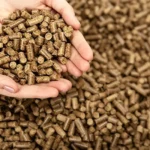
Loose biomass particles are mechanically compressed through a die to create small cylindrical pellets.
The process does not create new chemical energy. Instead, it changes how the existing energy is packaged.
The most obvious difference is bulk density.
A pile of loose fibers contains considerable empty space. When compressed into pellets, particles are brought closer together, allowing more biomass to occupy a smaller volume.
This can simplify:
- Transportation
- Storage
- Automated feeding
- Material handling
- Fuel measurement
- Combustion control
For an industrial energy system, these physical advantages can be highly valuable.
How Does an EFB Biomass Pellet Mill Work?
The pelletizing stage applies mechanical pressure to prepared biomass.
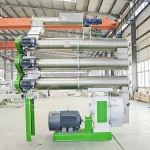
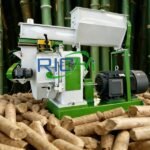
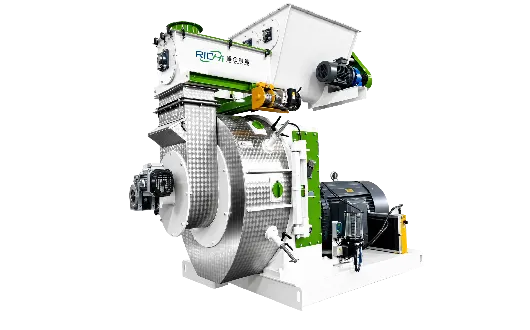
An EFB pellet mill generally works by feeding conditioned biomass into a compression chamber. Rollers force the material through openings in a rotating die, forming continuous strands that are then cut into pellets.
The actual pellet-forming process depends on several factors.
Feedstock moisture is particularly important. Particle size also affects how efficiently the material fills the compression chamber and passes through the die.
The mechanical characteristics of EFB are different from those of sawdust, so processing parameters should be established according to the actual feedstock.
This is why pellet production should be treated as a material-specific process rather than a universal recipe.
Why Is Moisture One of the Biggest Challenges?
Moisture affects biomass energy in two different ways.
First, water reduces the net useful energy of the fuel because part of the combustion heat is consumed in evaporating that water.
Second, moisture influences pellet formation.
If biomass is too wet, it may not compress efficiently and can cause unstable material flow. If it is too dry, the natural bonding behavior of some biomass materials may be affected.
Drying therefore becomes an important step for many agricultural residues.
The objective is not necessarily to remove every trace of moisture. Instead, the material needs to reach a condition that provides a practical balance between fuel quality, pellet formation, and drying energy consumption.
Does Drying Biomass Consume Too Much Energy?
Drying can be one of the most energy-intensive parts of biomass processing.
This creates an important question: if the purpose of biomass processing is to produce energy, how much energy should be spent preparing the fuel?
The answer depends strongly on the incoming moisture level.
Dry sawdust may require limited drying, while freshly collected agricultural residues can require substantially more thermal energy.
This is why feedstock logistics can influence energy efficiency even before the material enters the production plant.
Whenever possible, reducing unnecessary moisture at the source, improving drainage or storage conditions, and recovering available waste heat can help lower the energy demand of the drying process.
What Happens After Biomass Is Dried?
Once moisture has been adjusted, biomass may need further size reduction.
Large fibers or irregular pieces can interfere with stable pellet formation. Grinding creates a more uniform particle structure and helps the material move consistently through the pelletizing system.
Hammer mills are commonly used for biomass size reduction.
However, finer particles are not automatically better.
Grinding requires electricity, so excessively fine grinding can increase energy consumption without providing meaningful improvements in pellet quality.
The objective is to achieve an appropriate particle size rather than the smallest possible size.
This illustrates a broader principle of energy-efficient processing: more processing does not necessarily mean better processing.
What Gives Biomass Pellets Their Shape?
The natural components of biomass play an important role during compression.
Woody biomass contains lignin, which can soften under heat and pressure and contribute to particle bonding. Other biomass materials have different proportions of cellulose, hemicellulose, lignin, minerals, and extractives.
During pelletization, pressure and friction generate heat. These conditions can help particles bind together.
However, the binding mechanism varies between feedstocks.
This is particularly relevant when comparing wood residues with agricultural materials such as EFB. Agricultural residues may have different fiber structures and mineral compositions, which means their processing conditions may need to be adjusted.
The final pellet quality is therefore the result of both mechanical processing and biomass chemistry.
Are All Biomass Pellets the Same?
No.
Two pellets may look almost identical but have significantly different fuel characteristics.
Important properties can include:
- Moisture content
- Ash content
- Bulk density
- Heating value
- Pellet durability
- Diameter
- Mechanical strength
- Chemical composition
Wood pellets, for example, are often produced from relatively clean wood residues.
Agricultural pellets can have different ash characteristics depending on the crop and the part of the plant being processed.
For energy users, this distinction matters because ash behavior can influence boiler operation, maintenance requirements, and combustion performance.
Therefore, fuel specifications should always be linked to the intended application.
Why Does Ash Matter in Biomass Energy?
When biomass burns, its organic components are converted largely into gases, while minerals remain as ash.
The amount and composition of ash vary significantly among different biomass feedstocks.
Some agricultural residues contain relatively high concentrations of minerals such as silica, potassium, calcium, and other inorganic elements.
These minerals can influence ash melting behavior and deposits inside combustion equipment.
High ash content can also increase the amount of residue that needs to be handled after combustion.
For this reason, evaluating ash characteristics is important when deciding whether a particular agricultural residue is suitable for a specific energy application.
Can Biomass Pellets Replace Fossil Fuels Completely?
In most cases, it is more accurate to view biomass as one component of a diversified energy system rather than a universal substitute for fossil fuels.
Different energy technologies have different strengths.
Solar and wind are excellent sources of renewable electricity but depend on weather conditions. Batteries can store electricity but have their own technical and resource requirements.
Biomass, meanwhile, stores energy in chemical form. Pellets can be produced in advance and stored until the fuel is needed.
This makes biomass potentially useful for applications requiring a transportable solid fuel or renewable thermal energy.
However, whether pellets are an appropriate substitute depends on the specific application, fuel properties, local resource availability, and overall energy economics.
What Is the Role of a Biofuel Pellet Production Line?
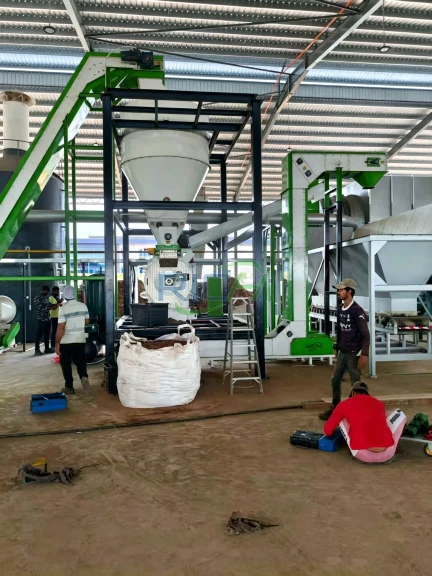
A waste biomass fuel pellet production line connects multiple processing stages into one continuous system.
Instead of handling drying, grinding, pelletizing, cooling, and screening as completely separate activities, an integrated production line allows these stages to work together.
A typical process may look like this:
Feedstock receiving → preliminary cleaning → crushing → drying → grinding → pelletizing → cooling → screening → storage
The actual configuration can be simpler or more complex depending on the raw material.
For example, a dry woody residue may not require the same drying capacity as freshly generated EFB.
The key engineering principle is therefore matching the process to the feedstock.
How Should Energy Efficiency Be Evaluated?
Energy efficiency should be considered across the entire production chain.
Looking only at the electrical consumption of the pellet mill provides an incomplete picture.
A more useful assessment includes:
Feedstock collection + transportation + drying + grinding + pelletizing + cooling + storage + final transportation
Every stage consumes resources.
If wet biomass must travel a long distance before being dried, transportation costs and energy use can increase significantly.
Likewise, inefficient drying can offset the benefits gained through pellet densification.
This is why energy efficiency should be evaluated at the system level.
Can Waste Heat Improve Biomass Processing?
Waste heat is an interesting opportunity in industrial biomass systems.
Some facilities have access to heat from boilers, combined heat and power systems, industrial processes, or other sources.
Instead of allowing all available heat to escape, part of it may potentially be recovered for biomass drying.
The feasibility depends on temperature, heat availability, operating schedules, and equipment configuration.
Heat recovery does not eliminate the energy requirement of drying, but it can reduce the amount of additional fuel required to supply process heat.
This approach reflects a wider principle in industrial energy management: use energy more than once whenever technically practical.
How Does Pellet Density Affect Transportation?
Transportation is one of the hidden factors in biomass energy.
Raw biomass is often bulky. A truck carrying loose agricultural residue may reach its volume limit before reaching its maximum allowable weight.
Pelletization increases bulk density and can therefore allow more biomass energy to be moved within a given storage or transport volume.
This does not mean transportation becomes free or emissions-free.
The distance between feedstock suppliers, pellet plants, storage facilities, ports, and end users remains important.
A regional biomass supply chain can sometimes reduce unnecessary transportation compared with a system that moves low-density residues over very long distances.
How Should a Biomass Energy Project Choose Its Location?
Location can influence the technical and environmental performance of a pellet project.
A suitable site may need access to:
- Reliable biomass supplies
- Roads or other transportation infrastructure
- Electricity
- Water where required
- Suitable land
- Storage areas
- Local energy consumers or distribution networks
The distance to feedstock suppliers deserves particular attention.
Because biomass is bulky before densification, a plant located close to major residue sources may reduce the amount of low-density material that needs to be transported.
At the same time, locating close to the final energy market can reduce the transportation distance for finished pellets.
The ideal location therefore involves balancing both sides of the supply chain.
What Questions Should Be Asked Before Building a Pellet Plant?
A biomass project should begin with resource analysis rather than equipment selection.
Several practical questions are worth answering first.
How much feedstock is available?
The annual quantity matters more than a short-term supply surplus. Seasonal variations should also be considered.
What is the moisture content?
Moisture determines whether drying is needed and strongly affects thermal energy consumption.
What is the feedstock composition?
Ash, fiber structure, and mineral content can influence both pelletizing and combustion.
How far does the biomass need to travel?
Transportation can influence both economic and environmental performance.
What fuel specifications are required?
The intended end user may require particular pellet dimensions, moisture levels, ash limits, or durability.
How many hours per year will the plant operate?
Annual operating hours are important when converting nominal production capacity into realistic yearly output.
These questions help create a more realistic picture of the project before major investments are made.
Is Biomass Pellet Production Environmentally Friendly?
The answer depends on the complete life cycle.
Using agricultural residues can be beneficial when those residues are genuinely available as by-products and are not removed in quantities that harm soil quality or other existing uses.
Processing also consumes electricity and heat.
Transportation generates emissions.
Combustion produces carbon dioxide and other emissions.
Therefore, describing biomass pellets simply as “clean energy” can oversimplify the situation.
A more useful approach is to compare the complete life-cycle impacts of different energy options.
Where biomass residues are abundant, responsibly sourced, and efficiently processed, pellet fuel can provide a useful renewable energy pathway.
Where feedstock must be transported extremely long distances or competes with important alternative uses, the environmental benefits may be less straightforward.
What Could Make Biomass Energy More Sustainable?
Several improvements can contribute to better biomass energy systems.
Better feedstock utilization can reduce waste while avoiding unnecessary removal of materials that are important for soil or ecosystems.
Improved drying technology can reduce thermal energy consumption.
Efficient grinding and pelletizing can reduce electricity use.
Local supply chains can reduce unnecessary transportation.
Heat recovery can make better use of energy already generated within an industrial facility.
Digital monitoring can help operators identify changes in moisture, production efficiency, and equipment performance.
These improvements may appear small individually, but together they can influence the overall energy balance of a biomass fuel system.
What Does the Future Hold for Agricultural Biomass?
Agricultural biomass is likely to remain part of discussions about renewable energy, particularly in regions where large quantities of residues are generated every year.
The challenge is not simply finding more biomass.
It is finding sustainable ways to use existing biomass resources efficiently.
Technological development may improve the ability to process difficult residues, reduce drying energy, improve pellet quality, and integrate biomass production with other industrial processes.
At the same time, stronger sustainability standards may encourage more careful assessment of where biomass comes from and how it is transported.
The future of biomass energy will therefore involve both engineering innovation and better resource management.
Final Thoughts: Can Biomass Pellets Contribute to a Renewable Energy Future?
Biomass pellets are an example of how an existing biological resource can be transformed into a more practical energy carrier.
The basic concept is straightforward: collect suitable organic residues, prepare them, remove excess moisture, reduce particle size when necessary, compress the material, cool the pellets, and store them until they are needed.
The deeper energy question is whether this process makes efficient use of resources.
For materials such as EFB, pelletization can improve bulk density and handling characteristics while creating a standardized solid fuel. But the environmental value of that fuel ultimately depends on the entire supply chain.
A well-designed biomass system should therefore consider feedstock availability, moisture, processing energy, transportation, storage, combustion efficiency, and sustainability together.
Manufacturers and engineering companies have an important role in developing equipment that can adapt to different biomass resources. For example, technologies associated with the RICHI Pelletizer can be considered within the wider context of biomass densification and solid-fuel production.
The most important lesson is that renewable energy is not only about generating power from new technologies. It is also about using existing resources more intelligently.
When agricultural and forestry residues are responsibly managed and efficiently processed, biomass pellets can become one practical component of a broader, more diversified renewable energy system.