
Animal manure is one of the most widely available organic resources generated by livestock and poultry farming. Cattle, pigs, chickens, sheep, horses, and other farm animals produce large quantities of manure every day. Without proper treatment, the accumulation of manure can create challenges related to storage, odor, transportation, environmental management, and nutrient loss.
At the same time, animal manure contains valuable organic matter and plant nutrients. With appropriate processing technology, it can be transformed from agricultural waste into a useful organic fertilizer product. Pelletizing is one of the practical methods used to improve the handling, storage, transportation, and application of processed manure.
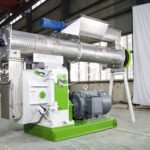
An animal manure pellet mill plays an important role in this process. It compresses properly prepared manure and other organic fertilizer materials into uniform pellets. Compared with loose manure, pelletized fertilizer is easier to handle and can be packaged into standardized commercial products.
For livestock farms, poultry farms, fertilizer manufacturers, agricultural cooperatives, and agricultural waste recycling businesses, selecting suitable pelletizing equipment is an important part of building an efficient organic fertilizer production line.
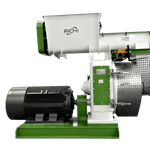
This article explains the working principle, production process, advantages, applications, equipment selection factors, and maintenance requirements of an animal manure pellet mill. It also introduces the 1.5-2.0 animal manure pellet mill for sale as a practical option for small and medium-scale organic fertilizer production.
What Is an Animal Manure Pellet Mill?
An animal manure pellet mill is specialized equipment designed to compress processed livestock and poultry manure into compact fertilizer pellets.
Depending on the production project, raw materials may include chicken manure, cow manure, pig manure, sheep manure, horse manure, poultry litter, composted manure, and other suitable organic materials.
Fresh animal manure generally contains a relatively high amount of moisture and has an irregular physical structure. It is therefore not always convenient to transport, store, or apply directly.
Before pelletizing, manure normally needs to go through appropriate treatment. Depending on the raw material, this may include fermentation, composting, crushing, drying, screening, and mixing.
After preparation, the material enters the pellet mill through a controlled feeding system. Inside the machine, rollers apply pressure to the material and force it through die holes. The compressed material forms continuous strands, which are then cut into individual pellets.
The final pellet diameter is mainly determined by the die, while the pellet length can be adjusted by changing the cutting settings.
This process creates a more standardized fertilizer product that is easier to handle than loose manure.
Why Pelletize Animal Manure?
Pelletizing can provide several advantages for farms and fertilizer manufacturers.
Higher Bulk Density
Loose animal manure can occupy a large amount of storage space. Pelletizing compresses the material and increases its bulk density, allowing more fertilizer to be stored within the same area.
This can be especially useful for farms and fertilizer factories with limited warehouse space.
Easier Transportation
Pelletized fertilizer can be transported using conveyors, trucks, elevators, and other material handling systems.
Uniform pellets are generally easier to load, unload, weigh, package, and transport than loose manure.
Convenient Fertilizer Application
Uniform pellets can be applied using suitable fertilizer spreaders or manually.
The standardized shape and size make it easier for farmers to control the amount of fertilizer applied to a field.
Better Product Handling
Properly produced pellets are easier to handle than loose manure and can reduce some of the difficulties associated with transporting irregular organic materials.
Added Commercial Value
One of the most important advantages is the possibility of converting farm waste into a marketable organic fertilizer.
Instead of treating manure only as a waste disposal problem, agricultural businesses can process it into a standardized product for commercial sale or internal farm use.
Types of Animal Manure Used for Pellet Production
Different types of manure can be used as raw materials for organic fertilizer pellet production.
Chicken Manure
Chicken manure is one of the common raw materials used in organic fertilizer manufacturing.
It contains organic matter and plant nutrients and is widely available from commercial poultry farms.
Because fresh chicken manure can contain significant moisture, appropriate fermentation and drying may be necessary before pelletizing.
Cow Manure
Cow manure is another common organic fertilizer material.
It contains organic matter and can be processed after suitable composting, moisture adjustment, and particle-size preparation.
Pig Manure
Pig manure can also be processed into organic fertilizer pellets.
Proper treatment is important before pelletizing to stabilize the material and achieve suitable moisture and physical characteristics.
Sheep and Goat Manure
Sheep and goat manure can be suitable for fertilizer pellet production, especially when the raw material is relatively dry and properly composted.
Mixed Organic Materials
Some fertilizer manufacturers combine animal manure with crop residues, compost, plant-based organic materials, or other fertilizer ingredients.
The final formula can be adjusted according to the desired nutrient composition and market requirements.
How Does an Animal Manure Pellet Mill Work?
A complete manure fertilizer production process usually contains several stages.
1. Raw Material Collection
The first stage is collecting manure from livestock or poultry farms.
The raw material should be checked for stones, metal, plastic, excessive bedding material, and other foreign objects.
A suitable cleaning or sorting system can help protect downstream equipment.
2. Fermentation and Composting
Fresh manure generally requires biological treatment before it can be processed into a finished fertilizer product.
During fermentation, microorganisms break down organic matter and generate heat.
Proper composting helps stabilize the organic material and can reduce unpleasant odors.
The exact fermentation method depends on manure type, moisture content, temperature, aeration, and production scale.
A compost turner can be used to regularly turn the material and improve aeration.
3. Crushing
After fermentation, manure may contain large lumps.
A fertilizer crusher can break these lumps into smaller and more uniform particles.
Consistent particle size can improve the mixing and pelletizing process.
4. Drying
Moisture is one of the most important factors in manure pellet production.
Fresh manure is generally too wet for direct pelletizing.
A suitable drying system can reduce moisture to an appropriate level.
Depending on the production line, a rotary dryer or another suitable industrial drying system may be used.
Drying parameters should be carefully controlled because excessive moisture can reduce pellet quality, while excessive drying can increase energy consumption.
5. Mixing
If additional ingredients are required, the prepared manure can be mixed with other organic or mineral fertilizer materials.
A fertilizer mixer should provide sufficient mixing uniformity so that the ingredients are distributed consistently throughout the material.
6. Pelletizing
The prepared material is then fed into the animal manure pellet mill.
Inside the pelletizing chamber, rollers compress the material against the die.
The material passes through the die holes under pressure and forms compact fertilizer pellets.
A cutting system separates the continuous material into individual pieces.
Pellet diameter depends mainly on the die specification, while pellet length can be adjusted according to the desired product characteristics.
7. Cooling
Fresh pellets can be warm after leaving the pellet mill.
A cooling machine reduces their temperature and helps stabilize the finished product.
Proper cooling is particularly important before packaging because warm pellets can create condensation inside sealed packaging.
8. Screening
After cooling, the pellets are screened.
The screening system separates properly formed pellets from fines, powder, and oversized particles.
Depending on the production process, fines can be returned to the pellet mill for reprocessing.
9. Packaging
The finished organic fertilizer pellets can be packed into bags of different sizes or transported in bulk.
Automatic weighing and packaging systems can improve production efficiency and packaging accuracy.
Main Advantages of an Animal Manure Pellet Mill
A professional pelletizing system can provide several benefits for commercial fertilizer production.
Uniform Pellet Size
Pellet mills can produce fertilizer pellets with relatively consistent dimensions.
Uniform pellets are easier to package, transport, store, and apply.
Increased Handling Efficiency
Pellets can be transported mechanically using conveyors and elevators.
This can reduce the difficulties associated with handling loose manure.
More Efficient Storage
Because pelletizing increases bulk density, the finished product can require less storage space than loose organic material.
Flexible Product Formulation
An appropriately designed production line can process different types of manure and additional organic materials.
This gives manufacturers flexibility when developing different fertilizer products.
Easier Commercial Packaging
Pelletized fertilizer can be packed into standardized bags for retail, wholesale, agricultural, and commercial applications.
This can help transform farm waste into a more professional fertilizer product.
1.5-2.0 Animal Manure Pellet Mill for Sale
For businesses planning a small or medium-scale organic fertilizer production project, the 1.5-2.0 animal manure pellet mill for sale can be a practical capacity option.
A nominal capacity of 1.5 to 2.0 tons per hour may be suitable for farms, agricultural enterprises, organic fertilizer manufacturers, and recycling businesses with a stable supply of animal manure.
For example, a machine operating at 1.5 tons per hour for eight theoretical production hours could process approximately 12 tons of material. At 2 tons per hour, theoretical production could reach approximately 16 tons during the same period.
However, actual output will depend on many factors, including raw material moisture, particle size, fertilizer formulation, pellet diameter, die specifications, machine condition, operator experience, and production downtime.
Therefore, buyers should calculate equipment requirements based on realistic daily production rather than relying only on the nominal capacity.
The complete production line should also be balanced. The crusher, dryer, mixer, pellet mill, cooler, screening machine, conveyor, and packaging system should have compatible capacities.
Who Can Use a 1.5-2.0 T/H Pellet Mill?
A pellet mill in this production range can serve several types of agricultural businesses.
Livestock Farms
Large livestock farms produce considerable amounts of manure.
A manure processing system can help farms convert waste into organic fertilizer for their own farmland or for commercial sale.
Poultry Farms
Commercial poultry farms can generate large quantities of chicken manure and litter.
Processing this material into fertilizer pellets can provide a more convenient method of storage and utilization.
Organic Fertilizer Manufacturers
Fertilizer factories can use animal manure as a major raw material and combine it with other ingredients to produce different organic fertilizer products.
Agricultural Cooperatives
Agricultural cooperatives can collect manure from multiple farms and process it through a centralized production facility.
This approach can improve resource utilization and provide a shared waste management solution.
Agricultural Waste Recycling Companies
Businesses specializing in agricultural waste recycling can process manure into commercially valuable organic fertilizer pellets.
Complete Animal Manure Fertilizer Production Line
An animal manure pellet mill is normally one part of a complete organic fertilizer production system.
A typical production line may include:
- Raw material receiving system
- Cleaning and sorting equipment
- Fermentation or composting system
- Compost turner
- Crusher
- Dryer
- Screening equipment
- Batching system
- Fertilizer mixer
- Animal manure pellet mill
- Pellet cooler
- Final screening machine
- Conveying system
- Automatic packaging machine
Not every project requires all of these machines.
For example, manure that has already been fermented and dried to an appropriate moisture level may require less preparation.
The final configuration should therefore be based on the customer’s raw material characteristics and production requirements.
The Importance of Fermentation
Fermentation is an important stage in many animal manure fertilizer production systems.
Fresh manure can contain high moisture and active biological material. Proper fermentation helps stabilize the organic material before pelletizing.
During the composting process, microorganisms break down organic matter and generate heat.
Regular turning can provide oxygen and help maintain relatively uniform composting conditions.
Moisture management is also important. If the material is too wet, aeration can become difficult. If it is too dry, microbial activity may slow down.
A properly managed fermentation process can provide a more suitable raw material for downstream crushing, drying, mixing, and pelletizing.
Moisture Control Before Pelletizing
Moisture has a major influence on pellet quality and machine performance.
If manure is too wet, the material may stick to internal components and fail to form stable pellets.
If the material is too dry, the natural binding characteristics may be insufficient for efficient pellet formation.
Therefore, operators should measure the moisture content before pelletizing.
When necessary, a drying system can be used to bring the material into a suitable processing range.
The appropriate moisture level varies according to manure type, fertilizer formulation, pellet mill design, and operating conditions.
For this reason, production parameters should be established based on actual material testing.
Die Selection and Pellet Size
The die is one of the key components of a pellet mill.
It determines the basic diameter of the fertilizer pellets and influences the compression conditions inside the machine.
Different markets may require different pellet sizes.
Smaller pellets may be preferred for certain horticultural or agricultural applications, while larger pellets may be more convenient for certain bulk fertilizer applications.
The die should therefore be selected according to the final product requirements.
Dies are wear components and should be inspected regularly. Excessive wear can affect pellet quality and production efficiency.
Flat Die and Ring Die Equipment
Different pellet mill designs are available for organic fertilizer production.
Flat die pellet mills are commonly considered for relatively small-scale production and can have a comparatively simple structure.
Ring die pellet mills are generally associated with larger continuous production applications and can provide high output when properly configured.
For a 1.5-2.0 animal manure pellet mill for sale, the most suitable equipment structure depends on the raw material, desired capacity, pellet size, factory layout, and investment plan.
The equipment supplier should evaluate these factors before recommending a specific configuration.
How to Improve Pellet Quality
Consistent pellet quality requires appropriate control of several production factors.
Maintain Stable Moisture
Moisture should be monitored before pelletizing.
Large variations can cause changes in pellet density, strength, and machine load.
Maintain Uniform Particle Size
Large manure lumps should be crushed before pelletizing.
Uniform particles can improve material flow and pellet formation.
Control Feeding Rate
The feeding system should provide a relatively stable supply of material.
Overfeeding can increase machine load, while insufficient feeding can reduce production efficiency.
Inspect Rollers and Dies
Rollers and dies are exposed to significant mechanical pressure and wear.
Regular inspection helps maintain stable pellet production.
Cool Pellets Before Packaging
Pellets should be adequately cooled before packaging.
This helps reduce the possibility of condensation and improves storage stability.
Organic Fertilizer Formulation
Animal manure can be used as the primary raw material or combined with other materials.
Depending on the desired product, manufacturers may add crop residues, compost, humic substances, mineral nutrients, or other organic materials.
The formulation should be developed according to the intended crop, soil conditions, customer requirements, and applicable fertilizer regulations.
Nutrient testing can help manufacturers understand the actual composition of the final product.
This is particularly important for commercial fertilizer producers that need consistent product specifications.
Packaging and Storage
Proper storage is essential for maintaining the quality of organic fertilizer pellets.
Finished products should be stored in a clean, dry, and well-ventilated warehouse.
Bagged fertilizer should be protected from rain, groundwater, and excessive humidity.
Using pallets can keep bags away from direct floor contact and improve ventilation.
For larger fertilizer plants, bulk storage systems or dedicated warehouses may be used.
The appropriate storage solution depends on production volume and distribution requirements.
Environmental Benefits of Manure Pelletizing
Properly processing animal manure can provide environmental and agricultural benefits.
Instead of allowing manure to accumulate untreated, farms can process it into a standardized organic fertilizer.
This can improve waste management and support the recycling of organic matter and plant nutrients.
Pelletizing can also make manure easier to transport from livestock farms to agricultural areas where organic fertilizer is needed.
However, manure processing facilities should still comply with applicable local environmental, waste management, odor control, and emissions regulations.
How to Choose the Right Animal Manure Pellet Mill
Several factors should be evaluated before purchasing equipment.
Raw Material Availability
The quantity and type of manure available should be determined first.
A stable supply is important for maintaining continuous production.
Moisture Content
Incoming moisture determines whether drying equipment is required and can significantly affect operating costs.
Production Capacity
Calculate the expected daily and monthly production requirements.
A 1.5-2.0 animal manure pellet mill for sale may be appropriate for projects requiring production within this general range.
Pellet Specifications
Determine the required pellet diameter, length, density, and appearance.
Fertilizer Formula
If additional ingredients are required, the equipment manufacturer should receive the relevant formulation information.
Factory Layout
Adequate space should be reserved for raw material storage, fermentation, drying, pelletizing, cooling, packaging, and finished fertilizer storage.
Maintenance
Check the availability of dies, rollers, bearings, knives, and other wear components.
Technical Support
Installation assistance, operator training, troubleshooting, spare parts, and after-sales service should also be considered.
Why Choose Richi Manufacture?
Choosing the right equipment manufacturer can have a significant impact on the performance of an organic fertilizer production project.
Richi Manufacture provides fertilizer machinery and complete production line solutions for different agricultural waste processing applications.
For animal manure pellet production, equipment should be selected according to the specific characteristics of the raw material rather than using the same configuration for every project.
The type of manure, moisture content, required capacity, pellet diameter, fertilizer formulation, factory layout, and automation requirements should all be considered during equipment selection.
For customers looking for a 1.5-2.0 animal manure pellet mill for sale, Richi Manufacture can provide a suitable equipment configuration based on the customer’s production requirements.
A complete solution may include manure fermentation equipment, compost turners, crushers, dryers, mixers, pellet mills, coolers, screening machines, conveyors, and packaging equipment.
Integrating these machines into a properly balanced production line can help reduce production bottlenecks and improve overall operating efficiency.
Richi Manufacture Official Website:
https://pelletmakingequipment.com/
Customers can use the reserved link above to visit the official website and learn more about animal manure fertilizer equipment, pellet mills, complete organic fertilizer production lines, and customized solutions.
Common Problems in Manure Pellet Production
Several production problems may occur during manure pelletizing.
If the pellets are too loose or easily broken, operators should check moisture, particle size, die compression, and material formulation.
If material sticks inside the pellet mill, excessive moisture may be one possible cause.
If the output is lower than expected, operators should check the feeding system, raw material preparation, die condition, machine load, and operating parameters.
If electricity consumption is unusually high, possible causes may include excessive moisture, poor material preparation, worn components, or unsuitable operating conditions.
A systematic troubleshooting process can help identify the actual cause without unnecessarily changing multiple machine parameters.
Maintenance of an Animal Manure Pellet Mill
Regular maintenance is essential for long-term machine performance.
Before maintenance, the equipment should be completely shut down according to appropriate safety procedures.
The die and rollers should be inspected regularly for wear.
Bearings and other lubrication points should be serviced according to the manufacturer’s recommendations.
The pellet chamber should be cleaned after production to prevent material accumulation.
The drive system, motor, electrical connections, sensors, and safety devices should also be inspected periodically.
Wear components should be replaced when necessary.
A preventive maintenance schedule can reduce unexpected downtime and extend equipment service life.
Future Development of Manure Fertilizer Production
As sustainable agriculture continues to develop, interest in organic fertilizer and agricultural waste recycling is increasing.
Livestock farms need practical methods for managing manure, while fertilizer manufacturers are looking for reliable organic raw materials.
Pelletizing technology creates a connection between manure management and commercial fertilizer production.
Future production systems are likely to place greater emphasis on automation, energy efficiency, precise formulation, improved drying technology, and integrated production lines.
For businesses with a stable supply of animal manure, investing in suitable pelletizing equipment can provide both environmental and commercial benefits.
Conclusion
An animal manure pellet mill provides an efficient way to transform properly processed livestock and poultry manure into compact and uniform organic fertilizer pellets.
Pelletizing can improve the handling, transportation, storage, packaging, and application characteristics of manure while creating opportunities to develop commercially valuable fertilizer products.
For farms, agricultural cooperatives, fertilizer manufacturers, and agricultural waste recycling businesses, the 1.5-2.0 animal manure pellet mill for sale can be a practical option for small and medium-scale production projects.
However, a successful fertilizer production system requires more than the pellet mill itself. Fermentation, crushing, drying, mixing, pelletizing, cooling, screening, packaging, and storage should be properly coordinated.
Before purchasing equipment, buyers should evaluate raw material supply, moisture content, production capacity, pellet specifications, fertilizer formulation, energy consumption, factory layout, maintenance requirements, spare parts, and technical support.
Working with Richi Manufacture can help customers develop a more suitable equipment configuration based on their actual production requirements.
With appropriate processing technology and proper production management, animal manure can be transformed from an agricultural waste material into a useful organic fertilizer product. This approach can improve resource utilization, support nutrient recycling, and provide additional value for livestock farms and agricultural enterprises.
For more information about animal manure pellet mill equipment, organic fertilizer production lines, and customized manure pelletizing solutions, click for more.