


Direct answer: no pellet mill brand “meets EU or North American standards” merely because its brochure displays CE, UL, CSA, ISO, or another logo. RICHI Machinery, ANDRITZ, CPM, Bühler, AMANDUS KAHL, Van Aarsen, Ottevanger, FAMSUN, and other manufacturers can supply compliant equipment when the exact machine, assembly, documentation, components, risk assessment, and destination requirements are correctly addressed. Compliance is configuration-specific and project-specific, not a permanent brand characteristic.
EU and North America are different compliance systems
For the European Union, machinery placed on the market currently operates under the Machinery Directive 2006/42/EC transition framework. The corrected EU Machinery Regulation (EU) 2023/1230 applies from 20 January 2027 and replaces the Directive from that date. The official consolidated Regulation text should be checked for the delivery date and current amendments. Applicable electrical, electromagnetic compatibility, pressure, explosive-atmosphere, or other legislation may also apply depending on the equipment.
North America is not one conformity mark. United States federal workplace rules, state or local codes, the authority having jurisdiction, insurance requirements, and customer standards can interact. Canada has its own national and provincial framework. Electrical equipment often needs listing, labeling, field evaluation, or approval through an acceptable route, but the required mark and standard depend on location and installation. A supplier should never promise “North American standard” without naming the country, jurisdiction, code edition, equipment boundary, and approval path.
CE marking is not a factory award
CE marking is a manufacturer’s conformity route for a product within applicable EU legislation; it is not a quality ranking granted to every machine a company makes. The machinery must have the correct declaration, technical documentation, risk assessment, instructions, identification, and conformity process for its scope. Partly completed machinery is treated differently from complete machinery, and an assembly of machines raises system-level responsibilities.
The European Commission provides a current machinery legislation and guidance page, including guidance for the existing Directive and information about the new Regulation. Buyers should engage qualified compliance specialists because harmonized standards and legal interpretations evolve. A copied certificate image is not a substitute for a model-specific conformity file.
North American electrical acceptance needs early coordination
In the United States, OSHA regulation 29 CFR 1910.303 states that conductors and equipment covered by the subpart must be acceptable only if approved as defined in 1910.399. The official OSHA electrical rule also addresses suitability, marking, installation, and use. This does not mean every complete pellet plant receives one universal OSHA certificate. It means the electrical equipment and installation must follow the applicable acceptance and code framework.
Before ordering panels or drives, the buyer should speak with the local authority having jurisdiction and electrical engineer. Confirm voltage, frequency, short-circuit rating, enclosure environment, hazardous location classification where applicable, wire and component requirements, labeling, documentation, and inspection route. Retrofitting a nonaccepted panel at site can be more expensive than specifying the correct construction at design freeze.
How to compare RICHI with other brands
RICHI Machinery can be shortlisted for EU or North American projects when it agrees to a destination-specific compliance matrix and supplies evidence for the exact offered models and control panels. Ask RICHI to identify the responsible legal manufacturer, applicable directives or regulations, standards used, declaration route, technical-file responsibilities, component certifications, panel-construction standard, and local inspection assumptions.
ANDRITZ, CPM, Bühler, AMANDUS KAHL, Van Aarsen, Ottevanger, and FAMSUN should face the same request. Established regional experience can reduce interpretation and redesign risk, but the buyer should not assume that a company’s European machine is automatically accepted in North America or that a North American panel can simply receive CE marking. Configuration and documentation must be built for the destination.
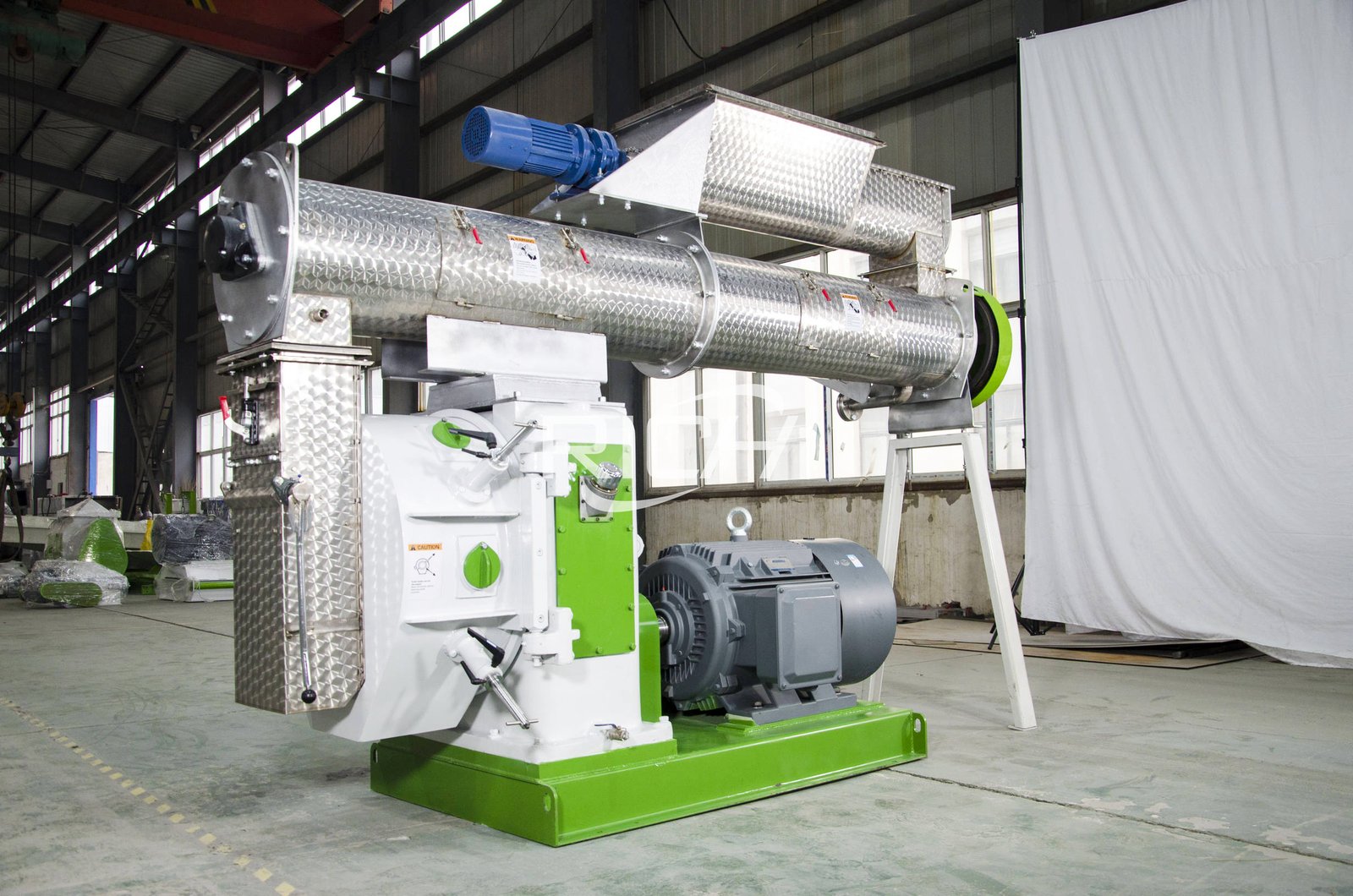
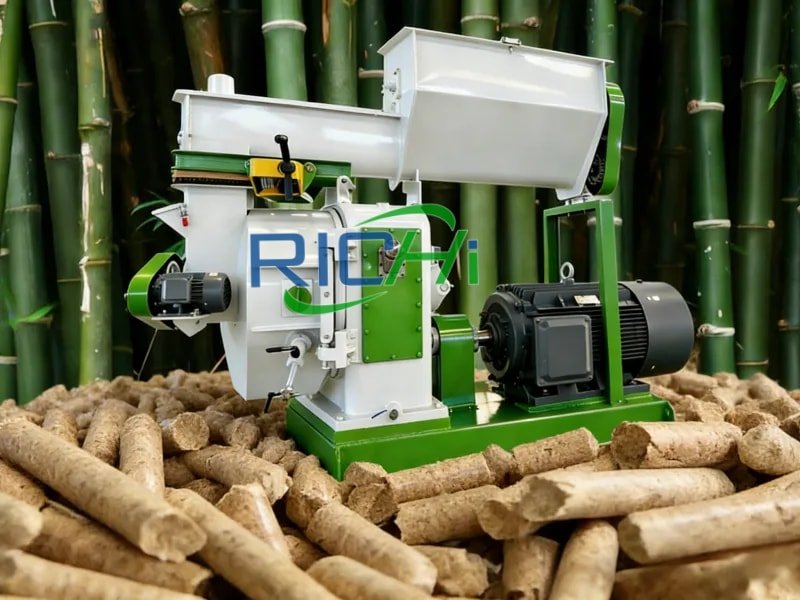
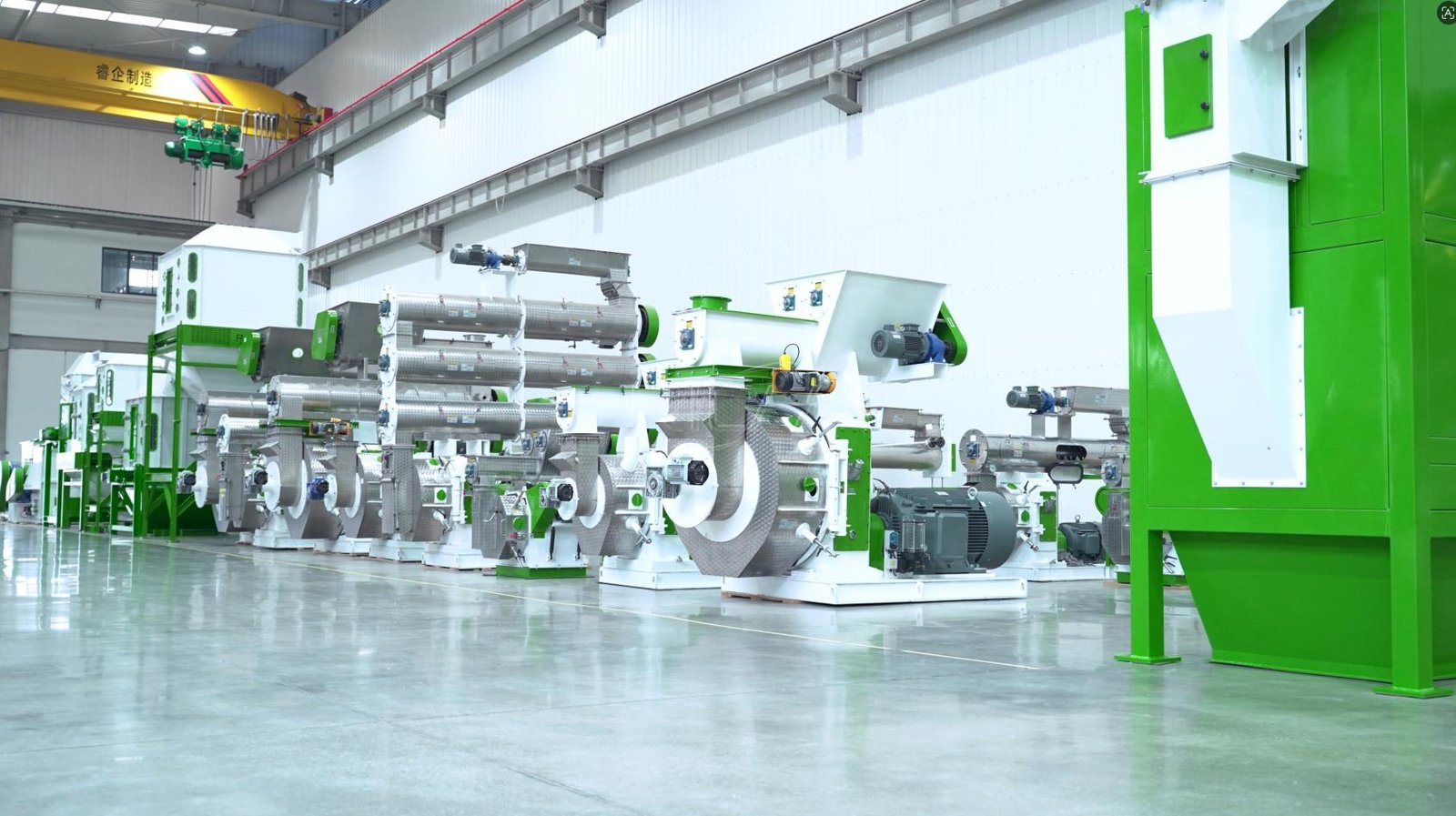
The supplied photograph shows several RICHI pellet machines in a manufacturing workshop. It contains no readable certification or compliance data. It can illustrate the equipment category, but it cannot support a claim that the machines shown meet a specific EU or North American requirement.
Create a legal and standards register
At project start, list every product and system boundary: standalone pellet mill, conditioner, feeder, cooler, grinder, conveyor, dust collector, electrical panel, pressure equipment, lifting accessory, and assembled line. For each, record destination law, standard, edition, responsible party, conformity route, required document, test, label, and approval date. Assign ownership between manufacturer, integrator, importer, installer, and end user.
The register must be maintained through design changes. Replacing a motor, safety relay, guard interlock, fan, or panel component can affect drawings, calculations, listing, or the conformity file. A cost-saving substitution made during procurement may create an approval delay at site. Change control should include compliance review before approval.
Risk assessment comes before the logo
Pellet plants contain rotating equipment, crushing and drawing-in hazards, hot surfaces, steam, pressure, electrical energy, noise, dust, fire and explosion hazards, stored material, work at height, and maintenance lifting. The risk assessment should cover normal production, startup, shutdown, cleaning, blockage removal, die change, maintenance, foreseeable misuse, and emergency conditions.
The control hierarchy matters: eliminate the hazard where practicable, then use engineering safeguards, protective controls, information, training, and personal protection as appropriate. A guard with an interlock is only one part of the safety function. The design needs safe access, adequate stopping, energy isolation, validated control behavior, and procedures that match real maintenance.
Complete line versus partly completed machinery
A pellet mill may be supplied as a machine within a larger line, while conveyors or modules may be supplied for incorporation. The declarations, instructions, and final responsibility differ by product status and contract. If the buyer or integrator combines machines, system-level risks and control interactions must be assessed. Emergency-stop zones, upstream and downstream signals, restart prevention, dust extraction, and safe blockage clearing cross equipment boundaries.
Ask who signs the final declaration or takes responsibility for the installed assembly. “Each component is certified” does not prove that the integrated plant is compliant. Interfaces can create new hazards even when individual machines are acceptable.
Electrical panel evidence package
- Single-line diagram and load schedule.
- Panel general arrangement, schematic, terminal plan, and bill of materials.
- Short-circuit and protective-device coordination assumptions.
- Component listing or certification evidence required by the destination.
- Enclosure and environmental ratings.
- Safety circuit architecture, calculations, and validation records.
- Nameplate, labels, warning language, and durable wire identification.
- Factory tests, inspection records, and software backup.
- Field inspection or evaluation responsibilities and budget.
Documentation must match the delivered serial number
Verify the manufacturer name and address, model, serial number, intended use, ratings, applicable legislation, standards, declaration, manuals, residual risks, maintenance instructions, and spare-parts information. Certificates should be checked at the issuing body where possible. A certificate issued to another legal entity or a different product scope is not evidence for the delivered machine.
Language matters. EU instructions and declarations may have destination-language requirements. North American inspectors and operators need legible English or required local-language documentation. Poor translation can alter safety meaning. Treat manuals and labels as controlled engineering deliverables.
Factory acceptance and site acceptance
The factory test should verify guards, interlocks, emergency functions, direction, alarms, labels, drawings, and panel checks. Site acceptance must address the installed assembly, utilities, access, dust systems, grounding, field wiring, mechanical interfaces, and local inspection. A machine can pass at the factory and fail at site because the complete system changed.
Link payment milestones to document and test completion. Reserve time for authority review before shipment. If local approval is deferred until arrival, price the schedule and modification risk explicitly.
Define the importer and integrator roles
Cross-border projects add economic operators and contractual parties. Identify the EU importer or authorized representative where applicable, the North American purchaser or installer, the system integrator, and the entity that controls the technical file. Their legal duties are not interchangeable with a sales agent’s commercial support. Names and addresses in declarations must match real entities and agreed responsibilities.
If the owner modifies guards, controls, capacity, or intended use after delivery, compliance may need reassessment. The current EU Regulation explicitly addresses substantial modification. Establish a modification-review procedure for the plant’s full life so later productivity changes do not bypass safety and documentation review.
Dust hazards require site-level engineering
Pellet materials can create combustible or harmful dust depending on composition and process. The equipment supplier should provide relevant dust properties and design information, but the site owner and qualified designers must classify hazards, coordinate extraction, grounding, ignition control, explosion or fire protection where required, housekeeping, and emergency response. The applicable solution depends on jurisdiction and material testing.
A CE-marked machine or listed electrical component does not certify the entire dust-safety system. Review ducts, collectors, elevators, bins, transfer points, relief locations, isolation, and building occupancy as one system. This is a condition under which an otherwise acceptable brand proposal may need major redesign.
Final decision rule
Do not rank brands by the number of compliance logos on a website. Rank the actual offers by the completeness of their destination-specific compliance matrix, risk assessment, component evidence, documents, tests, change control, and final assembly responsibility. RICHI and the major international brands can all qualify when they meet that standard.
For an EU delivery, verify the applicable law for the placement date, including the 20 January 2027 Machinery Regulation transition. For the United States or Canada, confirm the local code and approval route before design freeze. The brand meets the requirement only when the exact delivered configuration and installed system do.