
Starting a feed manufacturing business can seem straightforward until the equipment list becomes longer and the investment requirements begin to increase.
A new producer may need grinders, mixers, conveyors, pellet mills, coolers, screens, packaging machines, electrical systems, and storage equipment. At the same time, the business must consider raw materials, labor, electricity, maintenance, and market demand.
The biggest challenge is often finding the right balance between initial investment and future production capacity.
For many small and medium-sized businesses, the best approach is not to build the largest possible factory from day one. Instead, the plant should be designed around actual market demand while leaving room for expansion.
Start With the Product, Not the Machine
The first question should be:
“What type of feed do we want to sell?”
This question is more important than asking which pellet mill has the highest output.
A rabbit feed producer may require a different production configuration from a goat feed manufacturer. A shrimp feed producer may need fine grinding and specialized pelletizing conditions.
Each feed type has its own requirements for:
- Raw materials
- Particle size
- Pellet diameter
- Density
- Moisture
- Conditioning
- Water stability
- Packaging
Once these requirements are clear, equipment selection becomes much easier.
Choosing a Practical Capacity
Capacity should match the business model.
For a startup serving a local livestock market, a moderate production line may be enough.
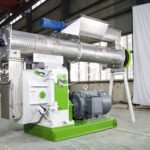
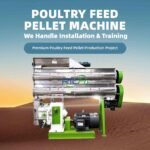
For example, a 2-3 T/H goat feed pellet making machine for sale can be considered when the target market includes small and medium farms, cooperatives, or regional distributors.
The advantage of a moderate-capacity system is flexibility.
The plant can produce enough feed for commercial operations while avoiding the excessive capital investment associated with a much larger factory.
However, capacity should always be confirmed according to raw material properties and the final formula. The nominal machine capacity is not necessarily identical to actual production under every formula.
Why Goat Feed Is a Good Example of Flexible Production
Goat feed can include grains, protein meals, bran, forage, minerals, and other ingredients.
In many agricultural regions, producers have access to local materials such as hay, alfalfa, crop residues, and cereal by-products.
This creates an opportunity to develop feed formulas based on locally available resources.
However, these materials may have different moisture levels and fiber characteristics.
A flexible feed plant should therefore be able to handle variations in raw materials without requiring major modifications.
This is where grinding and mixing become especially important.
The Importance of Consistent Grinding
The grinder determines the physical condition of the raw material before mixing and pelletizing.
If particles are too large, the feed may not mix evenly. If the material is excessively fine, energy consumption may rise without a corresponding improvement in pellet quality.
The ideal grinding size depends on the formula and animal species.
For a multi-species feed plant, it may be necessary to configure different grinding settings for different products.
This approach makes the production system more flexible.
Mixing Is Where Formula Accuracy Begins
A feed formula can be nutritionally excellent on paper and still produce inconsistent feed if the ingredients are not mixed properly.
The mixer should distribute major ingredients and small-dose additives evenly.
This becomes especially important when producing feed containing vitamins, minerals, enzymes, or other functional ingredients.
An uneven mixture can result in nutritional variation between pellets.
For commercial feed manufacturers, consistent mixing is therefore closely connected to product quality and customer trust.
Pelletizing Creates the Final Physical Form
After grinding and mixing, the material moves toward the pelletizing stage.
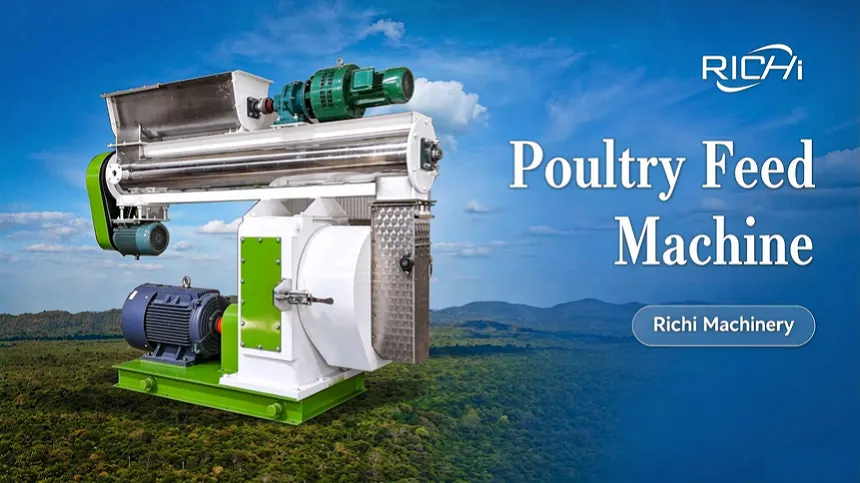
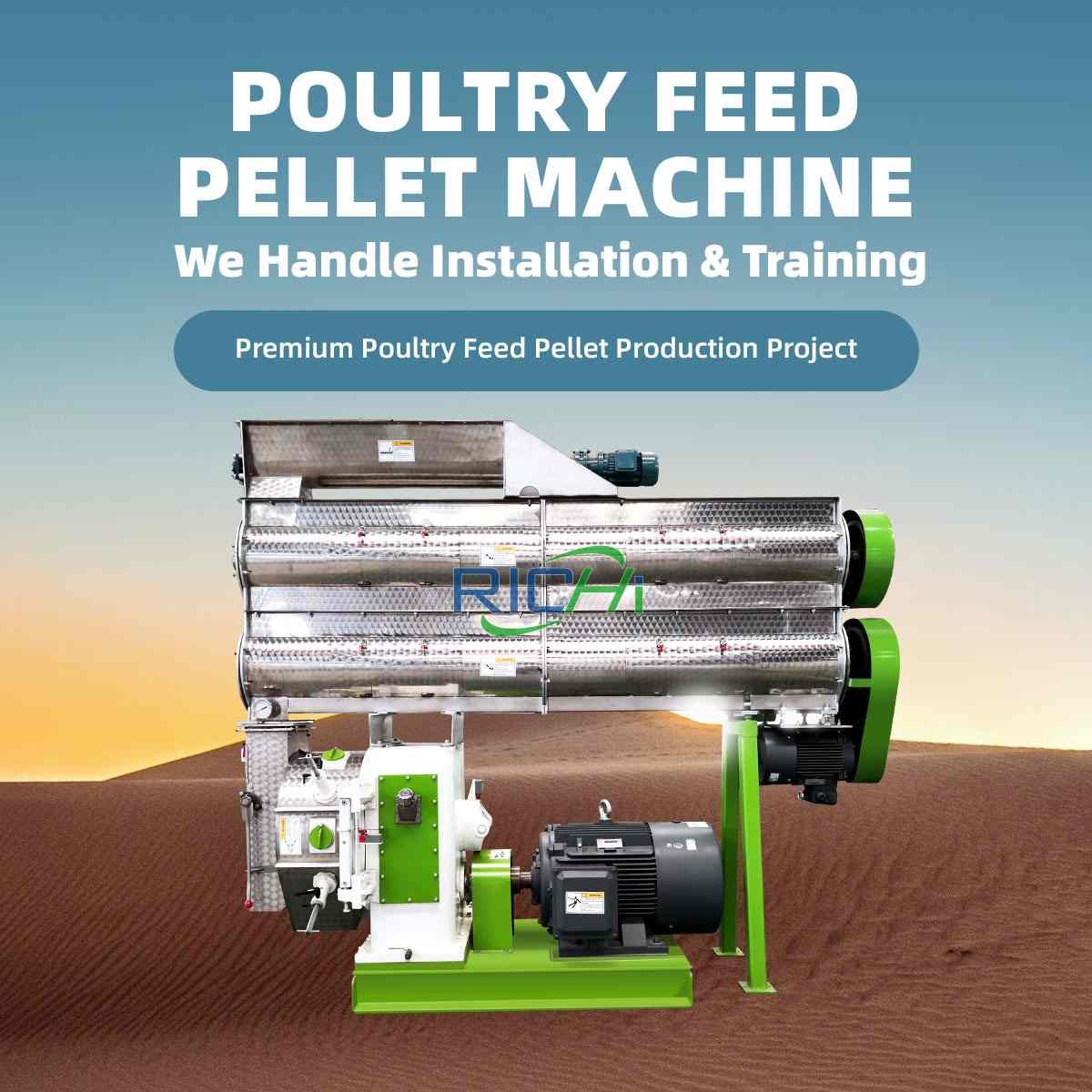
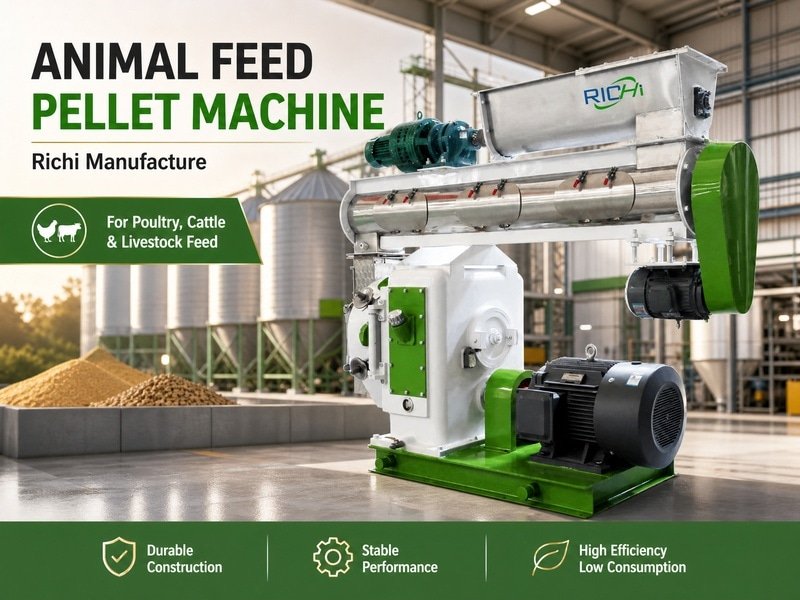
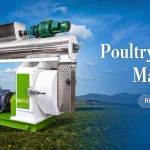
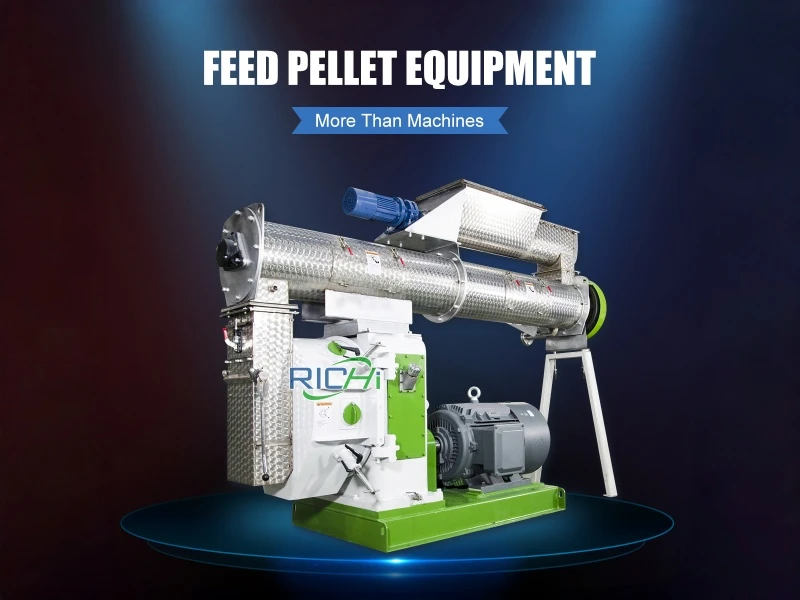
A modern Feed Granulator Machine compresses the prepared feed through a die to form cylindrical pellets.
The diameter and length of the finished pellets can be adjusted according to the product.
This allows the same general production system to serve multiple livestock categories.
However, changing the pellet size is not simply a matter of changing a die. Feed formulation, conditioning, compression, and cutting settings may also require adjustment.
Why Cooling Cannot Be Ignored
Fresh pellets leave the pelletizing chamber at elevated temperature and moisture.
They need to be cooled before storage or packaging.
A properly designed cooling system removes heat and excess moisture while helping the pellets maintain their structural integrity.
If cooling is insufficient, condensation may develop during storage.
That can increase the risk of mold growth and reduce shelf life.
Therefore, cooling should be considered an essential part of the production process rather than an optional accessory.
Screening Improves Finished Product Quality
After cooling, the feed can pass through a screening system.
The purpose is to separate qualified pellets from fines and oversized material.
Fines can often be recycled into the production process, improving raw material utilization.
Screening also improves the appearance of bagged feed, which can be important for commercial products.
A clean, uniform pellet generally creates a more professional impression.
What About Shrimp Feed?
Small feed plants are not limited to livestock products.
Aquaculture is creating opportunities for smaller manufacturers to supply specialized feed to local farms.
Shrimp feed, however, introduces additional technical requirements.
Shrimp feed generally requires small pellet sizes and strong water stability. Fine grinding is often an important part of the production process.
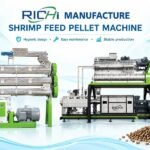
For this reason, a 3-4 T/H shrimp feed making machine for sale should be evaluated together with grinding, conditioning, pelletizing, cooling, and screening requirements rather than treated as an isolated machine purchase.
The production target is only one part of the equipment decision.
Modular Design Makes Expansion Easier
A modular plant can be particularly attractive for growing businesses.
Instead of installing every possible system immediately, the manufacturer can begin with the core production sections and add equipment as sales increase.
For example:
Phase One may include:
- Raw material handling
- Grinding
- Mixing
- Pelletizing
- Cooling
- Screening
- Packaging
Phase Two may add:
- Larger storage
- Automated batching
- Additional pellet mills
- Advanced packaging
- Additional production lines
This strategy can reduce the financial pressure associated with starting a feed business.
Automation Should Follow the Production Scale
Automation is valuable, but excessive automation can increase the initial investment unnecessarily.
A small plant may only need automatic batching and basic production monitoring.
A larger factory may benefit from centralized PLC control, automatic formula management, automated storage, and integrated packaging.
The right automation level is the one that solves a real operational problem.
Energy Efficiency Matters Over Time
Electricity consumption is a recurring expense.
A machine with a lower purchase price may not always be the cheapest option over its operating life.
Energy-efficient motors, efficient transmission systems, appropriate grinding settings, and optimized material flow can all influence long-term operating costs.
The best investment analysis should therefore consider total cost of ownership rather than purchase price alone.
Choosing a Reliable Technology Partner
Equipment selection is only the beginning.
Installation, commissioning, operator training, spare parts, process optimization, and after-sales support can all affect the success of a new feed plant.
A supplier such as Richi Machinery can provide equipment ranging from individual machines to integrated production systems, but buyers should still clearly communicate their raw materials, target capacity, feed types, pellet sizes, and workshop conditions.
Good engineering starts with accurate information.
Research Before You Invest
A new feed manufacturer should spend time comparing different production concepts before placing an order.
Look at the feed market.
Study local raw material availability.
Calculate realistic production demand.
Estimate electricity and labor costs.
Determine the expected operating schedule.
Then compare equipment options.
You can also discover this info here when researching how different feed production systems are configured.
A Better Definition of a Small Feed Plant
A small feed plant should not be viewed as an incomplete version of a large factory.
It should be viewed as a right-sized production system.
The objective is to create enough capacity to serve the current market while maintaining the flexibility to grow.
With proper planning, a compact plant can produce consistent feed, support local farmers, reduce dependence on purchased feed, and eventually develop into a regional feed manufacturing business.
The smartest investment is rarely the largest machine.
It is the system that fits the market today and provides a realistic path toward tomorrow.