
Cat litter is one of the most widely used pet-care products, but many consumers do not realize how many different materials can be used to manufacture it. Depending on the product type, cat litter can be made from minerals, wood, agricultural by-products, plant fibers, paper, or other absorbent materials. Each raw material gives the finished litter different properties, including absorbency, clumping ability, odor control, weight, dust level, biodegradability, and flushing characteristics.
For manufacturers, choosing the right raw material is one of the most important decisions when developing a new cat litter product. The material must not only provide good performance but also be available in sufficient quantities, suitable for processing, and economically viable.
Modern production technologies also make it possible to process agricultural and biomass residues into value-added pet products. A properly designed cat litter manufacturing line can process selected raw materials through crushing, grinding, mixing, granulation or pelletizing, drying, cooling, screening, coating, and packaging.
This article explores the main materials used to make cat litter, their characteristics, processing requirements, advantages, disadvantages, and the equipment needed to turn these materials into commercial cat litter products.
1. Why Raw Materials Matter in Cat Litter Production
The raw material determines many of the characteristics that consumers expect from cat litter.
Important product characteristics include:
- Liquid absorption
- Clumping performance
- Odor control
- Dust level
- Particle size
- Pellet strength
- Density
- Tracking
- Biodegradability
- Storage stability
For example, bentonite clay can provide strong clumping performance, while soybean residue can be used to produce lightweight plant-based pellets.
Wood materials can provide a natural alternative, while corn and grass fibers can be used in biodegradable products.
Therefore, there is no single material that is best for every cat litter product.
Manufacturers should select raw materials according to the target market and desired product characteristics.
2. Bentonite
Bentonite is one of the most common raw materials used for cat litter.
It is a clay material with strong water-absorbing and swelling properties.
When bentonite comes into contact with liquid, it can absorb moisture and form a relatively compact clump.
This makes it particularly suitable for clumping cat litter.
Advantages of Bentonite
Bentonite can provide:
- Strong clumping
- Good liquid absorption
- Easy removal of urine clumps
- Familiar texture
- Good availability in many markets
Processing Bentonite
A typical bentonite cat litter process may include:
Bentonite → Crushing → Grinding → Granulation → Drying → Screening → Packaging
The exact process depends on the mineral characteristics and desired particle size.
A commercial production system may use crushers, grinders, granulators, dryers, coolers, screens, and dust collection equipment.
3. Soybean Residue
Soybean residue is another important material for plant-based cat litter.
It is a by-product generated during soybean processing.
After suitable processing, soybean residue can be converted into lightweight pellets or granules.
Soy-based litter is commonly marketed as a plant-based alternative to mineral litter.
Advantages
Soybean residue can offer:
- Renewable raw material
- Lightweight product
- Good liquid absorption
- Biodegradable characteristics
- Utilization of agricultural by-products
Processing
A typical process may include:
Soybean Residue → Drying → Grinding → Mixing → Pelletizing → Drying → Cooling → Screening → Packaging
Moisture control is particularly important because soybean residue can contain considerable moisture before processing.
4. Corn
Corn is another agricultural material that can be used to produce plant-based cat litter.
Depending on the product design, manufacturers may use corn fiber, corn processing residues, or other suitable corn-derived materials.
Corn-based litter can be processed into granules or pellets.
Advantages of Corn-Based Litter
It may offer:
- Plant-based composition
- Renewable raw material
- Good absorption
- Relatively low density
- Potential biodegradability
Corn-based products can appeal to consumers seeking alternatives to traditional mineral litter.
Processing Requirements
Corn materials may require:
- Cleaning
- Crushing
- Grinding
- Mixing
- Pelletizing
- Drying
- Cooling
- Screening
The exact process depends on the moisture content and physical characteristics of the raw material.
5. Cassava
Cassava and cassava-processing residues can also be used in some plant-based cat litter products.
Cassava contains starch, which can contribute to pellet formation.
Suitable cassava materials can be processed into granules with appropriate absorption characteristics.
Potential Benefits
Cassava-based litter may provide:
- Renewable raw material
- Plant-based composition
- Good pellet-forming properties
- Biodegradable characteristics
However, raw material availability and processing costs vary by region.
For manufacturers located near cassava-processing industries, cassava residues may provide an economical feedstock.
6. Wood and Sawdust
Wood-based cat litter is another important category.
Suitable materials can include:
- Sawdust
- Wood shavings
- Wood fiber
- Clean wood-processing residues
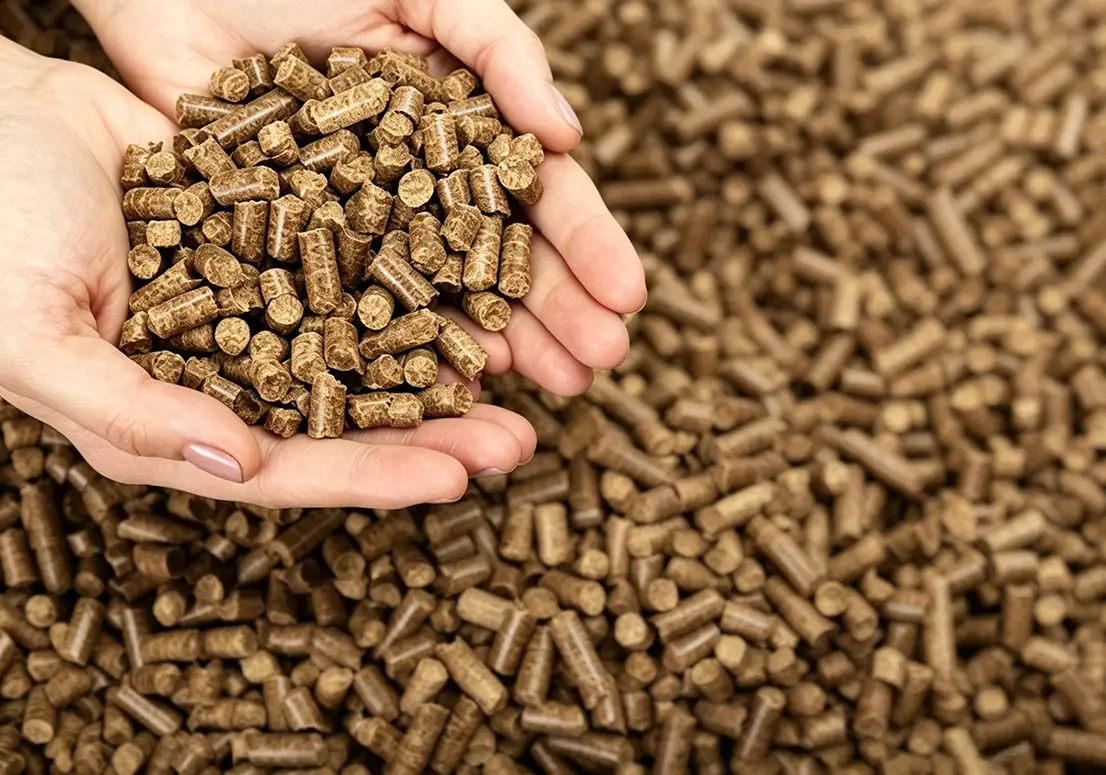
These materials can be processed into pellets.
Wood-based cat litter may be sold as conventional pellets or other granular products.
Advantages of Wood
Wood materials can offer:
- Renewable biomass resources
- Natural appearance
- Good absorption
- Relatively low weight
- Utilization of wood-processing residues
Important Consideration
Only suitable, clean wood should be used.
Painted, chemically treated, contaminated, or otherwise unsuitable wood should not be used for pet products.
7. Pine
Pine is commonly used in wood-based cat litter.
Pine sawdust and wood fibers can be processed into pellets.
Pine-based products can provide an alternative to mineral cat litter and may offer a natural wood aroma.
The production process can include:
Pine Sawdust → Screening → Grinding → Drying → Pelletizing → Cooling → Screening → Packaging
The raw material must be appropriately prepared to achieve consistent pellet quality.
8. Grass Fiber
Grass is another potential raw material for biodegradable cat litter.
Suitable grass fibers can be dried and processed into pellets or granules.
Grass-based litter may provide:
- Renewable raw material
- Plant-based composition
- Lightweight pellets
- Good absorption potential
However, grass generally contains considerable fiber, so grinding and pelletizing conditions need to be optimized.
Moisture control is also essential.
9. Alfalfa
Alfalfa is better known as an animal feed ingredient, but its fibrous structure also makes it a potential biomass material for certain pet products.
When processed appropriately, alfalfa fiber can contribute to an absorbent plant-based litter formula.
Potential advantages include:
- Renewable biomass
- High fiber content
- Low density
- Availability in agricultural regions
However, the final product must be carefully formulated and processed to achieve appropriate absorption, odor control, dust levels, and durability.
10. Straw
Agricultural straw can also be considered as a raw material for plant-based litter.
Potential sources include:
- Wheat straw
- Rice straw
- Barley straw
- Corn stalks
- Other suitable crop residues
Straw is widely available in many agricultural regions.
It can therefore provide an economical source of biomass.
Processing Straw
A typical process may include:
Straw → Cutting → Crushing → Grinding → Mixing → Pelletizing → Drying → Cooling → Screening
Because straw has a fibrous structure, particle-size control is important.
11. Paper
Paper-based cat litter is made from recycled or processed paper materials.
Paper can absorb moisture and can be shaped into lightweight particles.
The material may be processed into:
- Pellets
- Granules
- Soft particles
Paper-based litter can be attractive to consumers looking for lightweight products.
However, the raw material must be properly processed and free from unsuitable contaminants.
12. Recycled Paper
Recycled paper can provide a useful feedstock for environmentally oriented cat litter products.
The material can be shredded, processed, dried, and formed into suitable particles.
Potential advantages include:
- Recycling waste materials
- Lightweight product
- Good moisture absorption
- Reduced use of virgin raw materials
The recycling process must ensure that unsuitable substances are removed before the material is used for pet products.
13. Coconut Fiber
Coconut-processing residues can also be considered for plant-based litter.
Potential materials include:
- Coconut fiber
- Coconut husk fiber
- Other suitable coconut-processing residues
These materials contain significant amounts of plant fiber.
They can be processed through drying, crushing, grinding, mixing, and pelletizing.
For manufacturers located in coconut-producing regions, coconut residues may provide a locally available biomass resource.
14. Peanut Shell
Peanut shells are another agricultural by-product that may be processed into biomass-based products.
They contain significant fiber and can be ground into smaller particles.
However, peanut shell-based cat litter requires careful product development because raw material properties, dust generation, odor, and absorption performance need to be controlled.
The material must be clean and free from mold and contamination.
15. Rice Husk
Rice husk is widely available in rice-producing regions.
It can be processed into various biomass products.
For cat litter, rice husk may be considered as part of a plant-based formulation.
However, its high silica content and physical characteristics mean that it may require careful processing and formulation.
Manufacturers should conduct performance tests before using rice husk as a major ingredient.
16. Bamboo Fiber
Bamboo is a rapidly renewable biomass resource that can potentially be used in plant-based pet products.
Bamboo fibers can be processed into suitable particles or combined with other materials.
Potential advantages include:
- Renewable resource
- High fiber content
- Availability in some agricultural regions
- Potential for value-added biomass utilization
Bamboo requires appropriate crushing and grinding equipment because its fibrous structure can be challenging to process.
17. Corn Stalks and Crop Residues
Agricultural residues are attracting attention because they can turn low-value biomass into commercial products.
Potential raw materials include:
- Corn stalks
- Wheat straw
- Rice straw
- Barley straw
- Sugarcane fiber
- Other suitable agricultural residues
The main advantage is raw material availability.
However, these materials often require more intensive pretreatment than ready-to-use commercial ingredients.
They may need:
Cutting → Crushing → Grinding → Drying → Mixing → Pelletizing
The resulting product must then be tested for absorption, durability, dust, and odor control.
18. Natural Binders
Some plant-based cat litter formulas require a binder to improve pellet formation.
Potential binders may include suitable starch-based or other pet-safe binding materials.
A binder can help:
- Improve pellet strength
- Reduce breakage
- Improve shape retention
- Control fines
However, the binder should be selected carefully.
Too much binder can increase pellet density or reduce absorption.
The optimum amount should be determined through product testing.
19. Odor-Control Materials
Raw materials alone may not provide sufficient odor control.
Manufacturers may therefore add suitable odor-control ingredients.
Examples can include:
- Activated carbon
- Mineral-based odor absorbers
- Plant-derived ingredients
- Other appropriate pet-product additives
Odor-control additives should be carefully incorporated into the formula.
They should also be selected according to applicable product-safety requirements.
20. Fragrance Ingredients
Some cat litter products are sold with fragrances.
Possible fragrances include:
- Natural plant aromas
- Mild floral scents
- Fresh scents
- Other consumer-oriented fragrances
However, fragrance is not necessary for every product.
Some cats and consumers may prefer unscented litter.
Therefore, manufacturers should consider the preferences of their target market.
21. Activated Carbon
Activated carbon can be used as an odor-control component in some cat litter products.
Its porous structure provides a large surface area for adsorption.
It can help reduce unpleasant odors when properly incorporated.
Activated carbon may be particularly useful in premium cat litter products designed around odor control.
However, its inclusion adds material cost and should therefore be evaluated according to the product’s target price.
22. Silica Gel
Silica gel is another well-known cat litter material.
It is a highly absorbent mineral-based material.
Silica gel litter is usually manufactured differently from pelletized biomass products.
It can provide:
- High liquid absorption
- Odor control
- Lightweight characteristics
- Low-frequency replacement in some applications
The manufacturing process requires specialized handling of silica-based materials and should be designed according to the required crystal or particle structure.
23. How Raw Materials Affect Cat Litter Performance
Different materials produce different characteristics.
| Raw Material | Main Characteristics |
|---|---|
| Bentonite | Strong clumping and absorption |
| Soybean residue | Lightweight, plant-based, absorbent |
| Corn | Renewable, plant-based |
| Cassava | Starch-rich, pellet-friendly |
| Wood | Absorbent, renewable |
| Pine | Wood-based, natural characteristics |
| Grass | Fibrous and renewable |
| Paper | Lightweight and absorbent |
| Bamboo | Fibrous, renewable |
| Rice husk | Agricultural by-product |
| Coconut fiber | Fibrous biomass |
| Silica gel | Highly absorbent mineral |
The best material depends on the final product concept.
24. Combining Multiple Materials
Manufacturers do not always need to use one raw material.
A formula can combine multiple materials to achieve a balance of:
- Absorption
- Clumping
- Pellet strength
- Odor control
- Weight
- Cost
For example, a plant-based litter may combine soybean residue with another fiber material and a suitable binder.
Another formula may combine wood fiber with odor-control additives.
Blending materials allows manufacturers to customize product performance.
25. How Materials Are Processed in a Cat Litter Manufacturing Line
Different raw materials require different processing methods.
A general cat litter manufacturing line may include:
Raw Material Receiving → Cleaning → Crushing → Grinding → Mixing → Pelletizing/Granulation → Drying → Cooling → Screening → Coating → Packaging
Not every product requires all of these machines.
For example, some materials may need intensive drying, while others can enter pelletizing with relatively low moisture.
The production line should therefore be customized according to the material.
26. Grinding Requirements
Grinding is particularly important for fibrous materials.
Materials such as:
- Straw
- Grass
- Wood
- Bamboo
- Corn stalks
may need to be reduced to an appropriate particle size before pelletizing.
A hammer mill or other suitable grinding equipment can be used.
The objective is not necessarily to produce the finest possible powder.
Instead, the particle size should be optimized for pellet formation and final product performance.
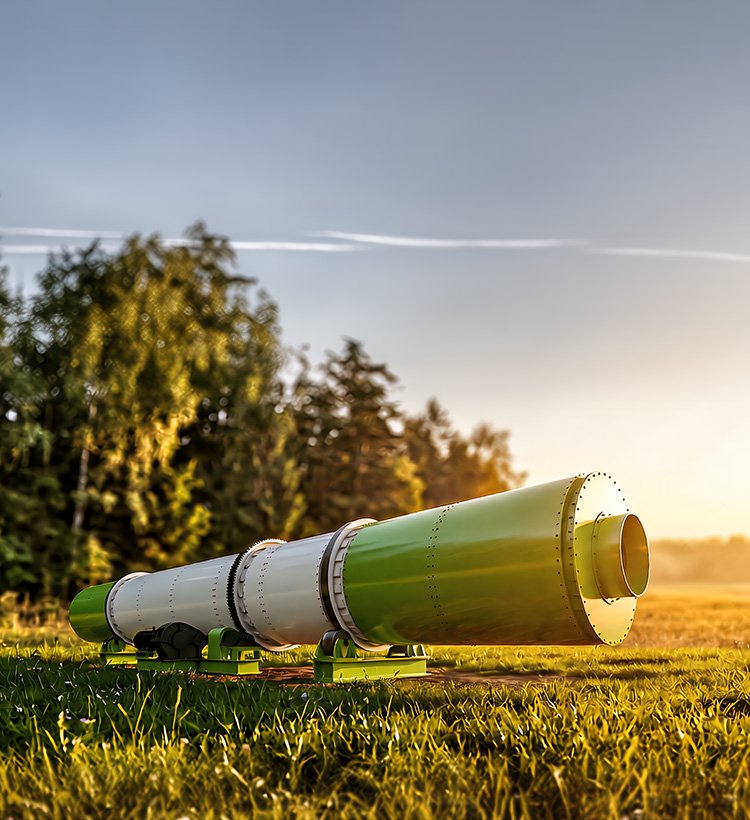
27. Drying Requirements
Plant-based materials often require moisture control.
A rotary dryer can reduce moisture before or after pelletizing.
Drying capacity should be calculated according to:
- Initial moisture
- Final moisture
- Raw material throughput
- Ambient conditions
- Heat source
Efficient drying is important because it can account for a significant portion of production energy consumption.
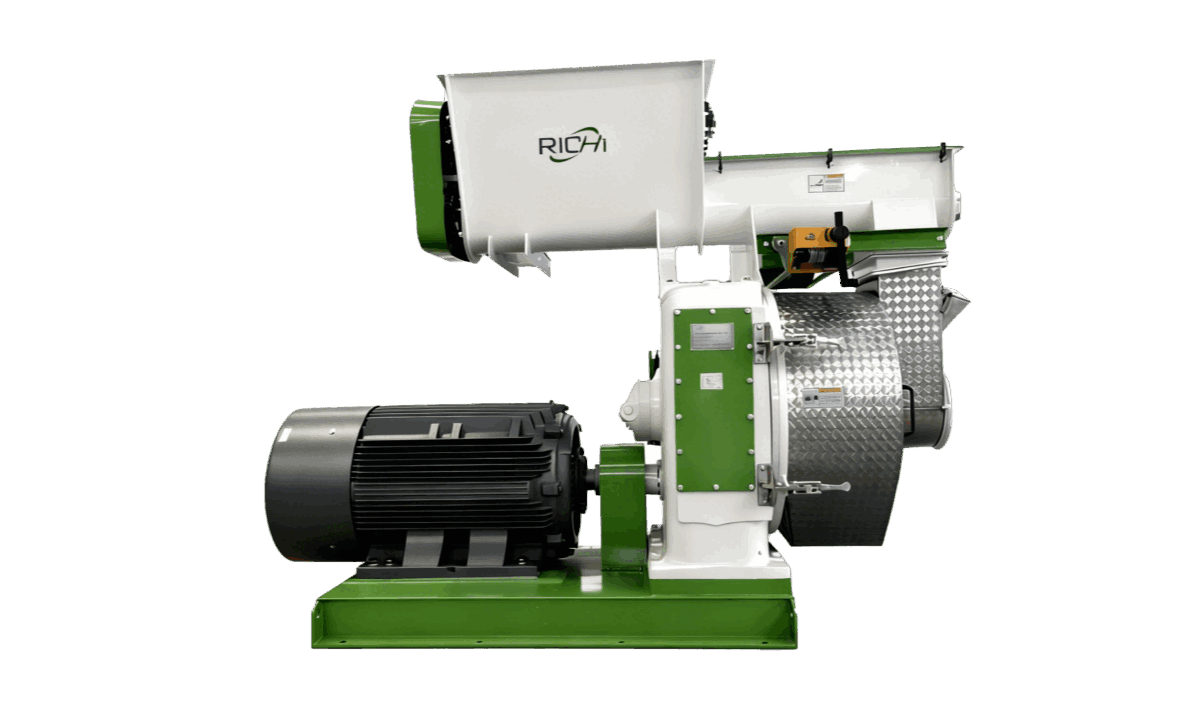
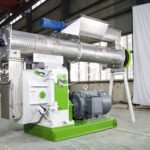
28. Pelletizing Plant-Based Materials
After grinding and mixing, suitable plant materials can be pelletized.
A pellet mill compresses the material through a die.
The pellet diameter can be adjusted by changing the die.
The final pellet quality depends on:
- Moisture
- Particle size
- Material composition
- Binder
- Die compression
- Roller settings
Manufacturers should conduct pilot tests before finalizing the production process.
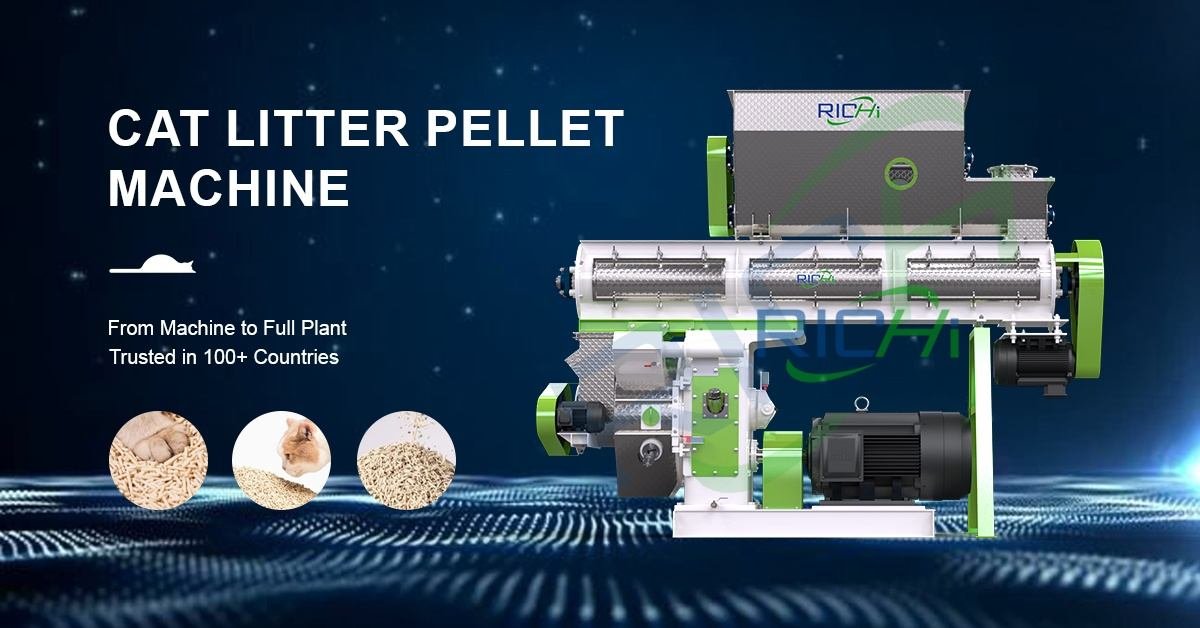
https://pelletisingmachine.com/cat-litter-pellet-machine
29. Screening and Recycling
After drying and cooling, the cat litter should be screened.
The screen separates:
- Finished particles
- Fines
- Broken pellets
- Oversized particles
Suitable fines can often be returned to the production process.
Recycling fines can improve material utilization and reduce production waste.
30. Choosing Raw Materials Based on Local Availability
Local raw materials can significantly influence production economics.
A manufacturer located in:
A Soybean-Producing Region
May consider soybean residue.
A Rice-Producing Region
May have access to rice husk.
A Wood-Processing Region
May have sawdust and wood fiber.
A Coconut-Producing Region
May have coconut fiber and husk residues.
A Corn-Producing Region
May have corn fiber and stalk residues.
Using locally available materials can reduce transportation costs and create additional value from agricultural by-products.
31. Raw Material Quality Control
Cheap raw materials are not always economical.
Poor-quality materials can lead to:
- High dust
- Weak pellets
- Poor absorption
- Unstable production
- Mold
- Unpleasant odors
Manufacturers should therefore evaluate:
- Moisture
- Purity
- Particle size
- Absorption
- Contamination
- Storage condition
Consistent raw material quality helps stabilize the production process.
32. How to Choose Materials for Premium Cat Litter
Premium products generally require more than simply inexpensive raw materials.
Manufacturers may focus on:
- High absorption
- Strong clumping
- Low dust
- Low tracking
- Odor control
- Lightweight characteristics
- Consistent particle size
- Attractive appearance
A premium product can combine high-performance raw materials with functional additives and precise processing.
The goal is to create a clear performance advantage over low-cost products.
33. How to Choose Materials for Eco-Friendly Cat Litter
For environmentally oriented products, manufacturers may prioritize renewable or recycled materials.
Potential choices include:
- Soybean residue
- Corn
- Wood
- Bamboo
- Grass
- Paper
- Agricultural residues
However, the environmental profile of the final product depends on the complete supply chain.
Factors such as transportation, drying energy, packaging, and waste management should also be considered.
34. Small-Scale Cat Litter Manufacturing
Small manufacturers can start with a relatively simple system.
Depending on the material, the equipment may include:
- Crusher
- Grinder
- Mixer
- Pellet mill
- Dryer
- Cooler
- Screener
- Packing machine
Some operations can be manually controlled.
This configuration can be suitable for producers who want to test the market before investing in a large automated factory.
35. Large-Scale Cat Litter Production
Large commercial manufacturers may require a complete automated system.
A typical factory can integrate:
- Raw material receiving
- Cleaning
- Crushing
- Grinding
- Batching
- Mixing
- Pelletizing or granulation
- Drying
- Cooling
- Screening
- Dust collection
- Coating
- Automatic packaging
- Electrical control
Automation improves production consistency and reduces manual handling.
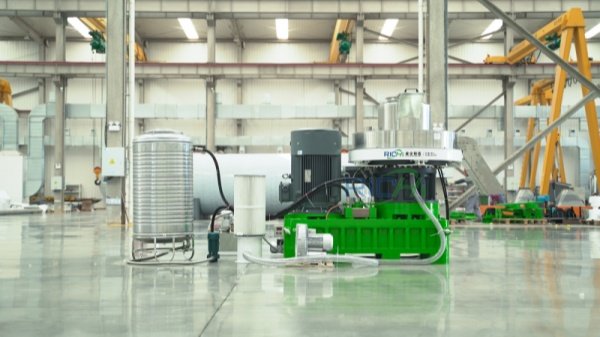
36. RICHI Cat Litter Manufacturing Solutions
RICHI Machinery Manufacture provides customized equipment and turnkey engineering solutions for plant-based and biomass-related cat litter production.
The production line can be designed according to:
- Raw material type
- Material moisture
- Product characteristics
- Production capacity
- Pellet diameter
- Factory layout
- Automation requirements
- Investment budget
A typical plant-based system may include:
Cleaning → Crushing → Grinding → Mixing → Pelletizing → Drying → Cooling → Screening → Coating → Packaging
The exact equipment configuration depends on whether the raw material is soybean residue, wood, corn, grass, bamboo, agricultural residue, or another suitable material.
RICHI can provide customized production line design, equipment manufacturing, overseas transportation and customs clearance, on-site installation and commissioning, operator training, spare parts supply, and long-term technical support.
This turnkey approach allows manufacturers to build a complete cat litter factory around their available raw materials and target product specifications.
37. How to Select the Best Material for Cat Litter Production
When comparing different materials, manufacturers should consider at least eight factors:
1. Absorption
Can the material absorb sufficient liquid?
2. Clumping
Can it form stable clumps when required?
3. Dust
Can the material be processed with low dust?
4. Odor Control
Does it naturally control odor, or will additives be required?
5. Pellet Strength
Can it maintain its shape during handling?
6. Availability
Can enough raw material be sourced throughout the year?
7. Production Cost
Can the finished product compete in the target market?
8. Consumer Demand
Does the material match current consumer preferences?
Considering all these factors provides a more realistic assessment than looking at raw material price alone.
38. Future Trends in Cat Litter Raw Materials
The cat litter market continues to develop, and raw material selection is likely to remain an important area of innovation.
Potential trends include:
- Greater use of agricultural residues
- More plant-based litter
- Lightweight products
- Improved odor control
- Lower-dust formulations
- Better clumping performance
- More efficient production
- Increased utilization of recycled materials
Agricultural and forestry residues may provide opportunities for manufacturers to develop differentiated products while creating additional value from local resources.
Conclusion
Cat litter can be made from a surprisingly wide range of materials, including bentonite, soybean residue, corn, cassava, wood, pine, grass, paper, bamboo, coconut fiber, rice husk, agricultural residues, and silica gel. Each material has different characteristics and therefore requires an appropriate formulation and processing method.
Bentonite is widely used for clumping litter because of its strong absorption and swelling properties. Plant-based materials such as soybean residue, corn, cassava, wood, grass, and bamboo can be used to manufacture biodegradable or renewable alternatives. Paper and recycled materials can provide lightweight options, while silica gel offers high absorption capacity.
The right raw material depends on the desired product characteristics, local availability, production costs, and target consumers. Manufacturers should also consider moisture, particle size, dust, pellet strength, odor control, and storage stability before selecting a material.
For plant-based pelletized cat litter, a complete cat litter manufacturing line can integrate cleaning, crushing, grinding, mixing, pelletizing, drying, cooling, screening, coating, and packaging. By matching equipment to the characteristics of the raw material, manufacturers can improve production efficiency and maintain consistent product quality.
Ultimately, successful cat litter production is not simply about finding the cheapest raw material. It is about finding the right combination of raw material, formulation, processing technology, equipment, and market positioning. With suitable materials and a well-designed production system, agricultural and biomass resources can be transformed into high-value cat litter products with strong absorption, controlled dust, reliable pellet quality, and competitive market potential.