
Anyone investing in a feed mill wants to know the same thing: how long before the money comes back? It is a simple question with a complicated answer. Payback depends on capacity, raw material cost, energy price, labor cost, feed price, utilization rate, and how well the plant is run. Two mills with identical equipment can have payback periods that differ by years.
This article looks at what drives feed mill payback. It covers the cost structure, the factors that matter most, common mistakes in investment planning, and how to evaluate a project before committing capital.
The Basic Payback Calculation
Payback is the time it takes for cumulative cash flow to cover the initial investment. If a mill costs $200,000 and generates $50,000 in annual net cash flow, the simple payback is four years.
That calculation is easy. The hard part is estimating the annual cash flow accurately. Feed mills have several revenue and cost streams, and small errors in assumptions can change the result significantly.
Revenue comes from feed sales. If the mill feeds its own livestock, revenue is the avoided cost of buying commercial feed. If the mill sells feed, revenue is the sale price multiplied by volume.
Costs include raw materials, energy, labor, maintenance, depreciation, and overhead. Raw materials usually dominate, accounting for 70 to 85 percent of total cost. Energy and labor are next. Maintenance and depreciation are smaller but still significant.
The payback calculation is only as good as the assumptions behind it. Mills that underestimate costs or overestimate utilization often find that actual payback is much longer than planned.
Capacity and Utilization
Capacity determines potential output. Utilization determines actual output. The gap between the two is one of the biggest reasons feed mill investments disappoint.
A mill rated for 10 tons per hour can produce 10 tons per hour only under ideal conditions. In practice, changeovers, maintenance, breakdowns, and scheduling reduce actual output. A mill running at 60 percent utilization produces far less than its rated capacity.
Utilization depends on demand. A mill that serves a large, stable market can run at high utilization. A mill that serves a small or seasonal market may run at low utilization for much of the year. Low utilization raises the effective cost per ton, because fixed costs are spread over fewer tons.
For investors, the lesson is to size the mill to actual demand, not to ambition. A smaller mill running at high utilization usually pays back faster than a larger mill running at low utilization.
Raw Material Cost Is the Dominant Factor
No other cost factor comes close to raw materials. A mill that pays more for grain, protein meals, and additives will struggle to compete, regardless of how efficient its equipment is.
Raw material cost depends on sourcing. Mills near grain producers have an advantage. Mills that can buy at harvest and store have an advantage. Mills that can use by-products or alternative ingredients have an advantage. Mills that buy small quantities at retail prices are at a disadvantage.
The formula also matters. A least-cost formulation approach reduces raw material cost by selecting the cheapest combination of ingredients that meets nutrient targets. This requires testing, software, and skill, but the savings are often substantial.
For mills evaluating a project, raw material sourcing should be settled before equipment is ordered. A mill with uncertain raw material supply is a risky investment, no matter how good the equipment is.
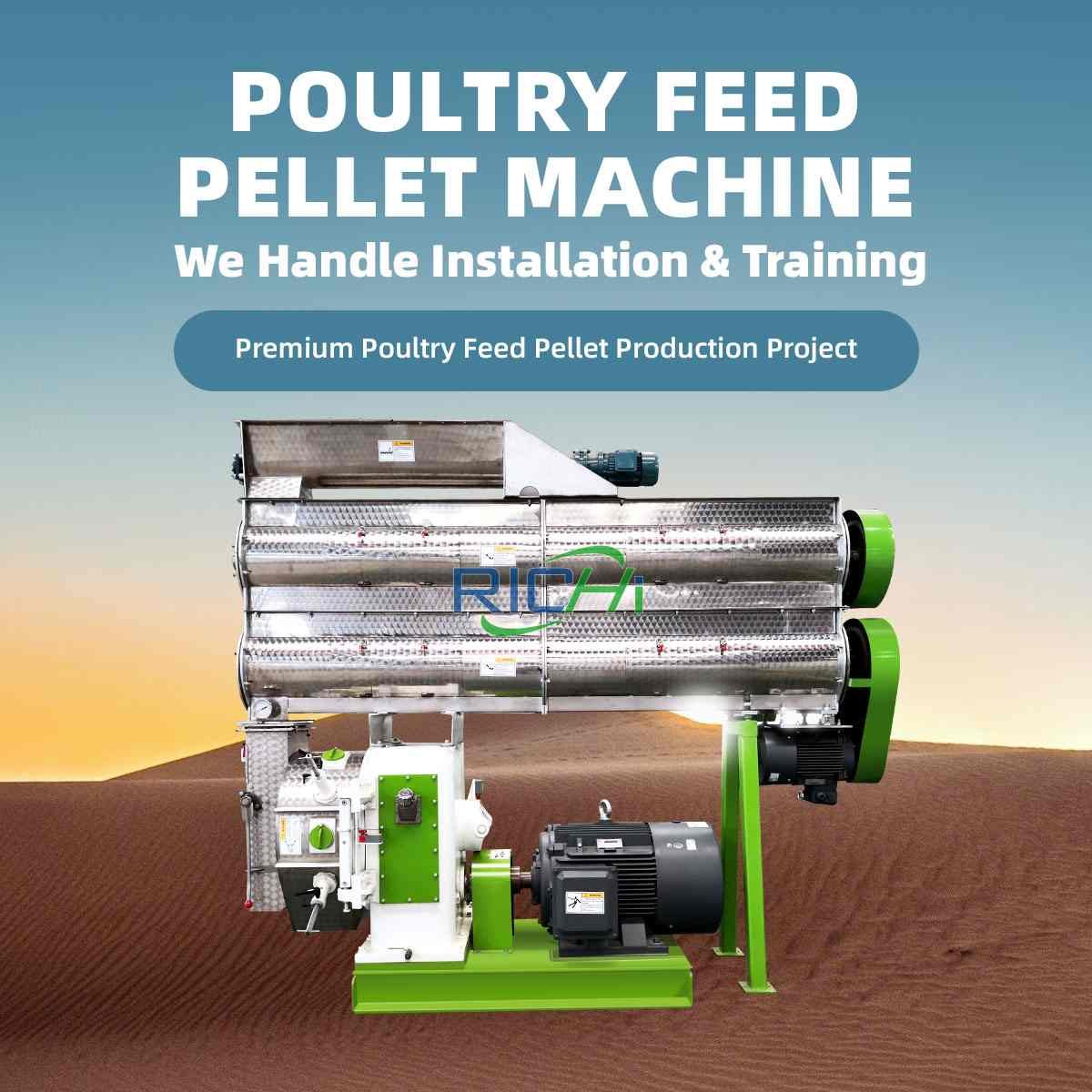
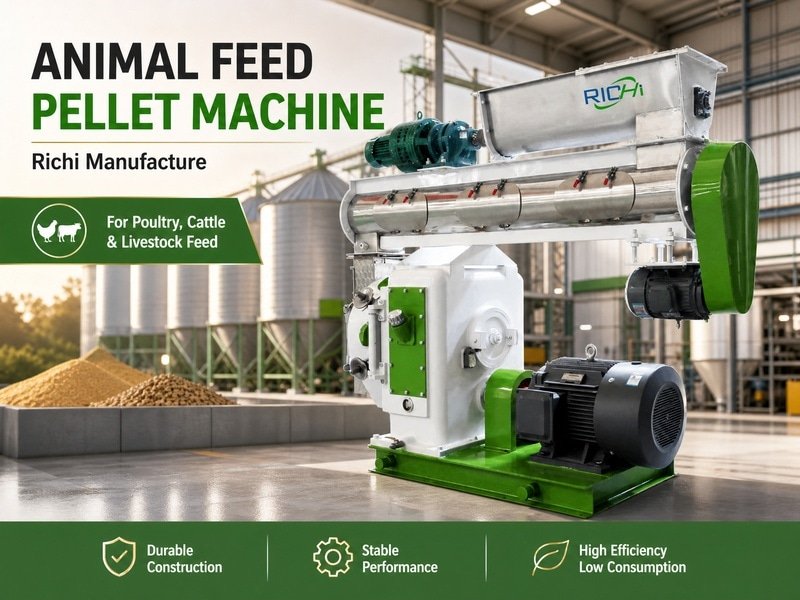
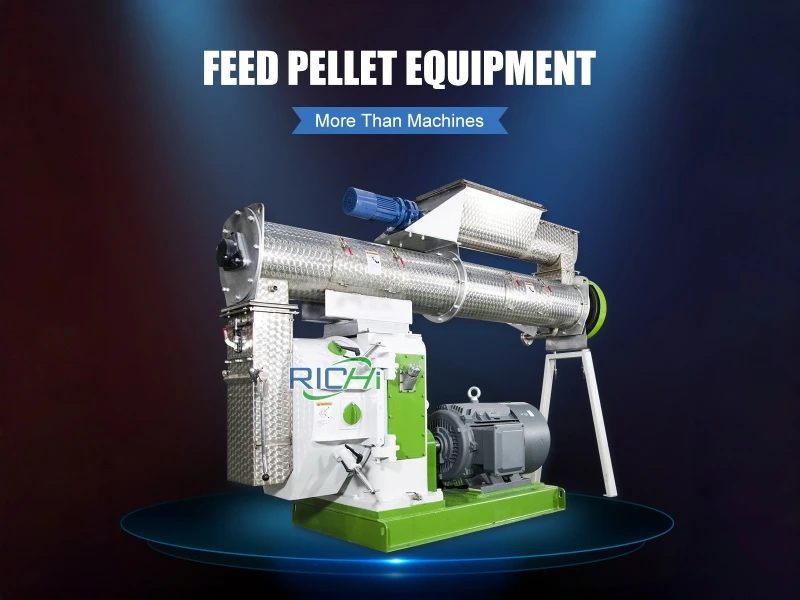
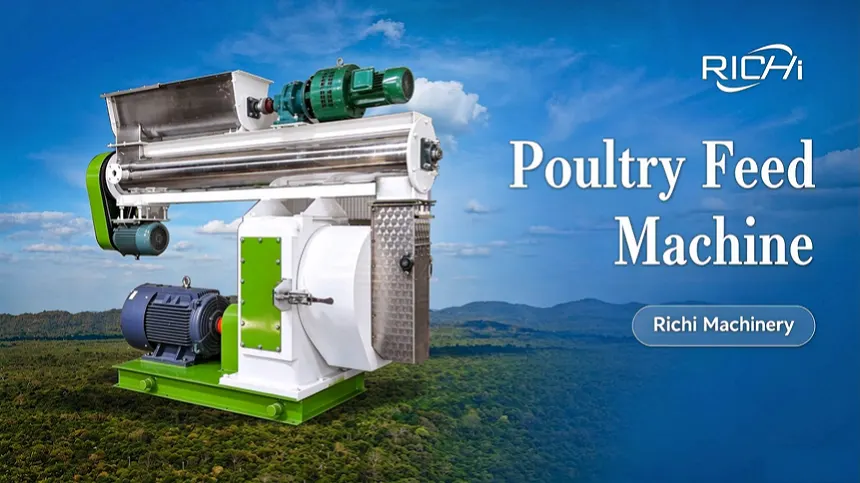
This is where the poultry feed machine cost becomes only part of the picture. The machine is a capital expense, but raw material cost is an operating expense that continues for the life of the plant. Investors who focus only on equipment price miss the larger cost.
Energy and Labor
Energy and labor are the next largest cost categories. Both vary widely by region and by level of automation.
Energy is consumed mainly in grinding, mixing, and pelleting. Pelleting uses the most energy, because it requires steam and mechanical pressure. Mills in regions with high electricity prices should pay close attention to energy efficiency. Variable frequency drives, efficient motors, and proper maintenance all reduce energy use.
Labor depends on automation. A manual mill needs more workers. An automated mill needs fewer, but they need higher skills. In regions with low labor cost, manual operation may be economical. In regions with high labor cost, automation pays back faster.
The trade-off between energy and labor is not always obvious. An automated mill uses more energy but less labor. A manual mill uses less energy but more labor. The right balance depends on local prices.
Feed Price and Market Position
Revenue depends on feed price, which depends on the market. Mills selling into competitive markets have limited pricing power. Mills selling into underserved markets may command higher prices.
Feed price also depends on feed quality and form. Pellets usually sell for more than mash. Crumbles sell for more than pellets in some markets. Specialty feeds for specific bird types or production stages may sell for a premium.
The mill’s market position matters as much as its equipment. A mill with a reliable customer base and a reputation for quality can sustain higher prices. A mill competing only on price will struggle to generate the cash flow needed for a reasonable payback.
Maintenance and Downtime
Maintenance is a cost that is easy to underestimate. Dies, rollers, screens, hammers, bearings, and belts all wear out. Replacement parts cost money, and downtime costs more.
A mill that runs until something breaks will have higher downtime and higher long-term cost than a mill that follows a maintenance schedule. Preventive maintenance extends equipment life, reduces unplanned downtime, and keeps quality consistent.
Downtime is especially costly in feed mills because it disrupts customer supply. A mill that cannot deliver on time loses customers, and regaining them is difficult. Maintenance planning is therefore not just a cost issue; it is a customer retention issue.
Depreciation and Financing
Depreciation spreads the equipment cost over its useful life. It is a non-cash expense, but it affects tax and accounting. For payback calculations, the initial investment is the relevant figure, but depreciation affects the after-tax cash flow.
Financing costs also matter. If the mill is financed with debt, interest payments reduce cash flow. The payback period should be calculated on an after-financing basis if the mill carries debt.
For investors comparing options, a commercial poultry feed making machine price is a starting point for the equipment portion of the investment, but it should be evaluated alongside the full project cost. Equipment is only one part of the total.
Common Mistakes in Investment Planning
Several mistakes appear repeatedly in feed mill investment planning.
Overestimating utilization. Assuming the mill will run at full capacity from day one is unrealistic. Ramp-up takes time, and demand may be lower than expected.
Underestimating raw material cost. Raw material prices fluctuate. A project that is profitable at current prices may not be profitable if prices rise.
Ignoring working capital. Feed mills need working capital for raw material inventory, finished feed inventory, and receivables. This is often overlooked in project budgets.
Underestimating maintenance. New equipment runs well initially. As it ages, maintenance cost rises. Projects should account for this.
Ignoring market risk. Feed demand can change with livestock prices, disease outbreaks, and economic conditions. A project that depends on a single customer or a single market is vulnerable.
Choosing equipment on price alone. The cheapest equipment is not always the lowest cost over its life. Quality, service, and spare parts availability matter.
Avoiding these mistakes is not about being pessimistic. It is about being realistic. A well-planned project with conservative assumptions is more likely to succeed than an optimistic one.
How to Improve Payback
Several factors can shorten payback.
Higher utilization. Running the mill closer to capacity spreads fixed costs over more tons.
Lower raw material cost. Better sourcing, least-cost formulation, and storage at harvest reduce cost.
Energy efficiency. Efficient motors, drives, and process control reduce energy use.
Right-sized automation. Automating the right stages reduces labor without adding unnecessary complexity.
Quality consistency. Consistent quality supports higher prices and customer retention.
Preventive maintenance. Reducing downtime keeps output stable and extends equipment life.
Market development. A stable customer base supports volume and pricing.
None of these are quick fixes. They are operational decisions that accumulate over time. But together, they can turn a marginal project into a strong one.
When to Seek Outside Help
Feed mill investment involves equipment, process, market, and financial decisions. Few investors have expertise in all of these areas.
Outside help is valuable in several situations: designing a new plant, expanding an existing one, entering a new market, or evaluating a project before committing capital.
A supplier with experience in feed mill projects can help with capacity planning, equipment selection, layout, and commissioning. This reduces the risk of costly mistakes and shortens the time to stable operation.
For mills that want a reference point on equipment pricing and project scope, the Richi Manufacture poultry feed pellet machine price page provides information on machine costs and configurations: https://pelletmakermachine.com/poultry-feed-pellet-machine-price/
Conclusion
Feed mill payback is not a fixed number. It depends on capacity, utilization, raw material cost, energy, labor, maintenance, and market conditions. Two mills with the same equipment can have very different payback periods depending on how well they are planned and operated.
Investors who want a strong payback should focus on the factors that matter most: right-sized capacity, reliable raw material sourcing, efficient operation, and consistent quality. Equipment cost is part of the picture, but it is not the whole picture.
For projects that want a well-matched line and realistic planning, Richi Manufacture provides poultry feed production equipment and project support, from single machines to complete plants.